Is Raising Backyard Chickens Worth It? Costs, Time, Limits
A six-hen backyard flock can require $845–$2,560 before recurring feed. That spread is planning territory, not a promise: a repaired shed and DIY run sit at one end, while new housing, a predator-secure run, purchased birds, and chick equipment push toward the other. If you're asking is raising backyard chickens worth it, the honest answer is usually yes for freshness, routine, and garden value, but not automatically for the cheapest eggs.
The useful test isn't whether hens will pay for themselves. It's whether your household can absorb the setup, 10–20 minutes a day, and years of care after peak laying slows.
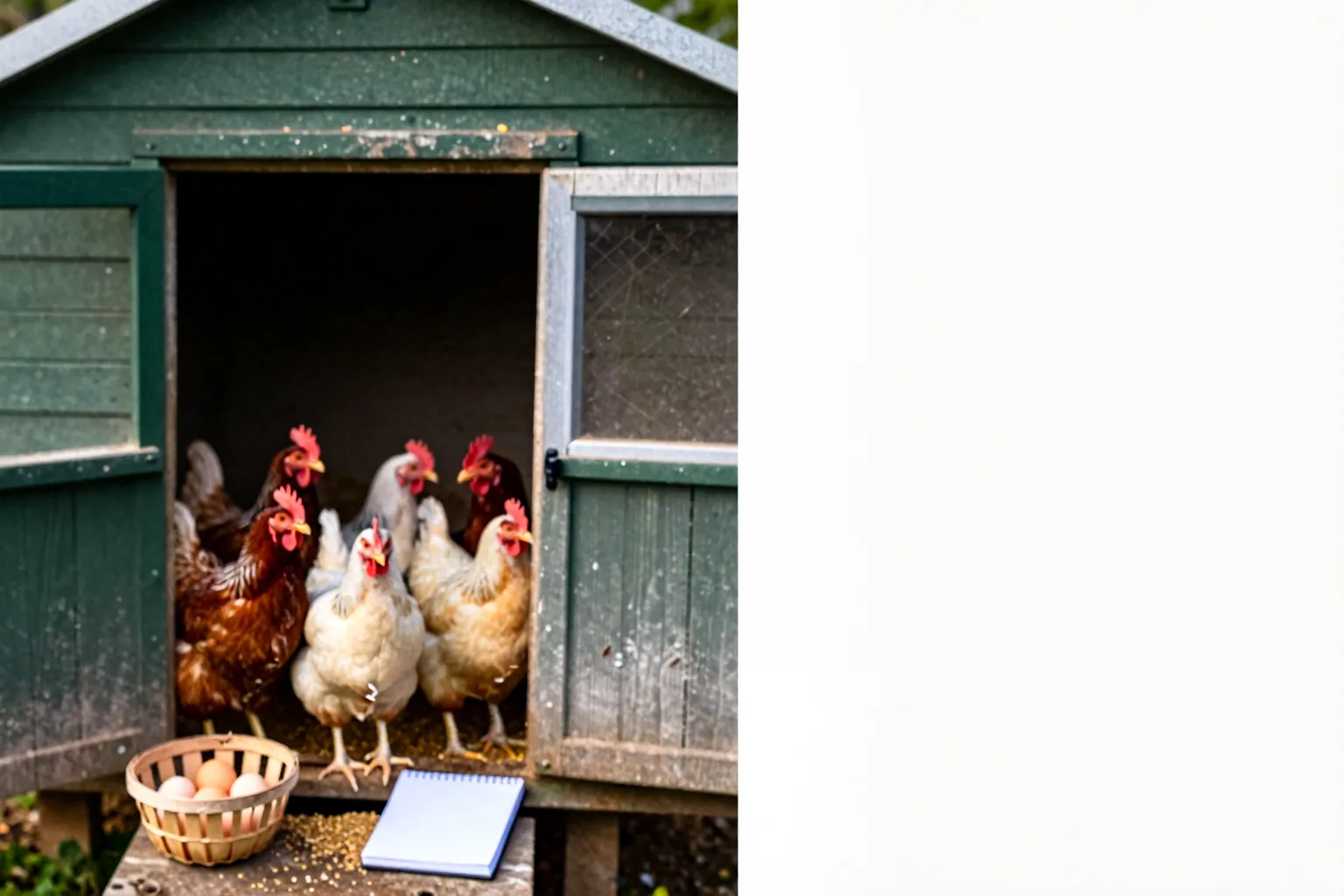
Price the flock twice: first-year setup and monthly running cost
Build one worksheet for things you buy once, then a second for things your birds consume or wear out. Don't hide the run inside a vague coop price. A secure run can cost as much as, or more than, the shelter.
| First-year setup item | Three hens | Six hens |
|---|---|---|
| Coop or converted shelter | $200–$650 | $200–$650 |
| Predator-secure run materials | $200–$850 | $200–$850 |
| Birds | $60–$300 | $120–$480 |
| Feeder and drinker | $40–$100 | $40–$100 |
| Brooder and chick heat setup | $75–$200 | $75–$200 |
| Initial bedding, nest materials, and small hardware | $210–$280 | $210–$280 |
| Setup total | $785–$2,380 | $845–$2,560 |
Those are planning ranges, not current market quotes. Check local feed stores, hatcheries, farm-supply shops, and used-equipment listings before you commit. The shared items don't double when you double the birds, but six hens still need the larger footprint. If your six-bird run or shelter won't meet that footprint, use the upper end or add a separate construction allowance.
If you buy started pullets instead of chicks, the brooder line may fall to zero, while the bird price can rise. If you already have a sound shed and tools, the low end becomes more realistic. For three hens, the table's components sum to $785–$2,380. For six hens, they sum to $845–$2,560.
Feed is the easiest recurring line to rebuild: number of hens × 100–130 g × 30 × current feed price per kilogram. Three hens use roughly 9–11.7 kg per month. Six use roughly 18–23.4 kg. Those amounts are a budgeting range, not a promise of exact consumption; large breeds, cold weather, wastage, and free-ranging change the result.
For an illustration only, a feed tag of $1–$1.50 per kilogram gives about $9–$18 a month for three hens or $18–$35 for six. Add bedding, grit, oyster shell, small repairs, and a modest health-care reserve. A workable household worksheet is about $20–$45 monthly for three hens and $35–$70 for six, before a veterinary bill or replacement birds. Replace the illustrative feed price with the current local price. The first year is usually the hardest to justify on egg savings because housing and equipment arrive before the flock's output.
For a narrower worksheet, use How much does it cost to feed backyard chickens each month? and plug in your own bag weight and price.
The 10-minute routine—and the jobs that still own your calendar
Plan on about 10–20 minutes on an ordinary day for three to six hens. That includes looking at each bird, refreshing water, feeding, collecting eggs, checking the run, and securing the birds at night. A quick glance at a feeder is not the same as a welfare check. You want to notice a hen that is hunched, limping, isolated, or not eating.
Once a week, allow another 30–90 minutes for soiled bedding, droppings under roosts, dirty drinkers, and a closer inspection of mesh and latches. Monthly work is less predictable: tighten hardware, clear drainage, replace worn bedding, and check for chewed wood or gaps. Before hot weather, arrange shade and spare water capacity. Before winter, test how you will stop water freezing and keep bedding dry.
An automatic door or timed feeder can reduce a narrow task. Neither can assess a bird, find a leaking drinker, or confirm that the run closed properly. A run beside the house is worth more than its square footage suggests because it makes the daily check easy to remember. A distant setup turns the same chores into a walk, a water haul, and a greater temptation to postpone them.
Travel needs its own plan. A caretaker should be able to check birds, water, feed, eggs, locks, and weather every day. Topping up a feeder once for a weekend is not a complete care plan.
Egg savings are only one line on the value sheet
During a good laying period, use roughly four to six eggs per hen per week as a planning range. Breed, age, molt, winter daylight, heat, illness, and individual variation can move it. Four hens therefore give you about 16–24 eggs in a strong week. That is useful output, but it is not a year-round production promise.
Consider a four-hen household that uses 12 eggs each week. At the planning range above, it may have 4–12 eggs left over in a good week. If nobody wants those eggs, they have little grocery value. A neighbor who accepts a dozen, a baking habit, or a plan for preserving surplus changes the value calculation.
Use this equation:
Annual grocery replacement value = usable eggs per year ÷ 12 × your local price per dozen.
Then subtract 12 months of feed, bedding, shell, grit, repair, and health reserves. Keep setup costs in a separate column. This prevents a common mistake: counting every egg as a saving while ignoring eggs given away, hens in molt, winter slowdowns, and older birds that still need care after laying becomes irregular.
There are non-cash benefits. Manure can become a useful garden input after proper compost management. Foraging gives birds something to do and may reduce some purchased feed, but the amount is too variable to remove feed from your budget. Free-ranging can also damage beds, spread droppings, expose birds to parasites, and make predator protection harder. A fenced section or supervised forage area is often the better compromise for a suburban yard.
Your egg price is not the flock's break-even price. Setup, spare time, and surplus eggs belong on the same worksheet.
The judgment call is simple: count freshness, routine, and garden use as lifestyle value, not as pretend cash savings. A flock can be worth having even when buying eggs remains cheaper.
Run the deal-breaker check: law, predators, weather, and travel
Check local rules before buying birds. A municipal or county office may regulate permitted numbers, setbacks, coop standards, roosters, waste, or nuisance noise. Rules can differ between neighboring jurisdictions. Keep the USDA APHIS backyard poultry biosecurity guidance nearby as a disease-prevention checklist, and compare your build with State or regional extension guidance on small-flock housing, feed, and egg production.
For a confined layer flock, start planning around about 4 square feet of sheltered floor space and 8–10 square feet of secure run per bird. That means six hens need about 24 square feet inside and 48–60 square feet outside as a starting point. A 4-by-6-foot sheltered floor and a 6-by-8-foot run make the arithmetic visible. Large breeds, wet climates, and full-time confinement call for more room, not cleverer measuring.
For the full build sequence, see How much coop and run space do three to six hens need? Space on paper is not enough. A run that drains badly can become unusable even if it meets the square-foot target, because mud, wet bedding, and standing water make cleaning and bird care harder.
Predator protection is a system. Use mesh with openings small enough for the predators in your area, a roof or covered section, latches that a raccoon cannot simply lift, and a ground barrier or outward apron where digging animals are common. Light chicken wire may contain hens, but it should not be treated as a complete barrier against a determined predator. Inspect the bottom edge, corners, gate, and roof line. Those are the places a shortcut usually shows.
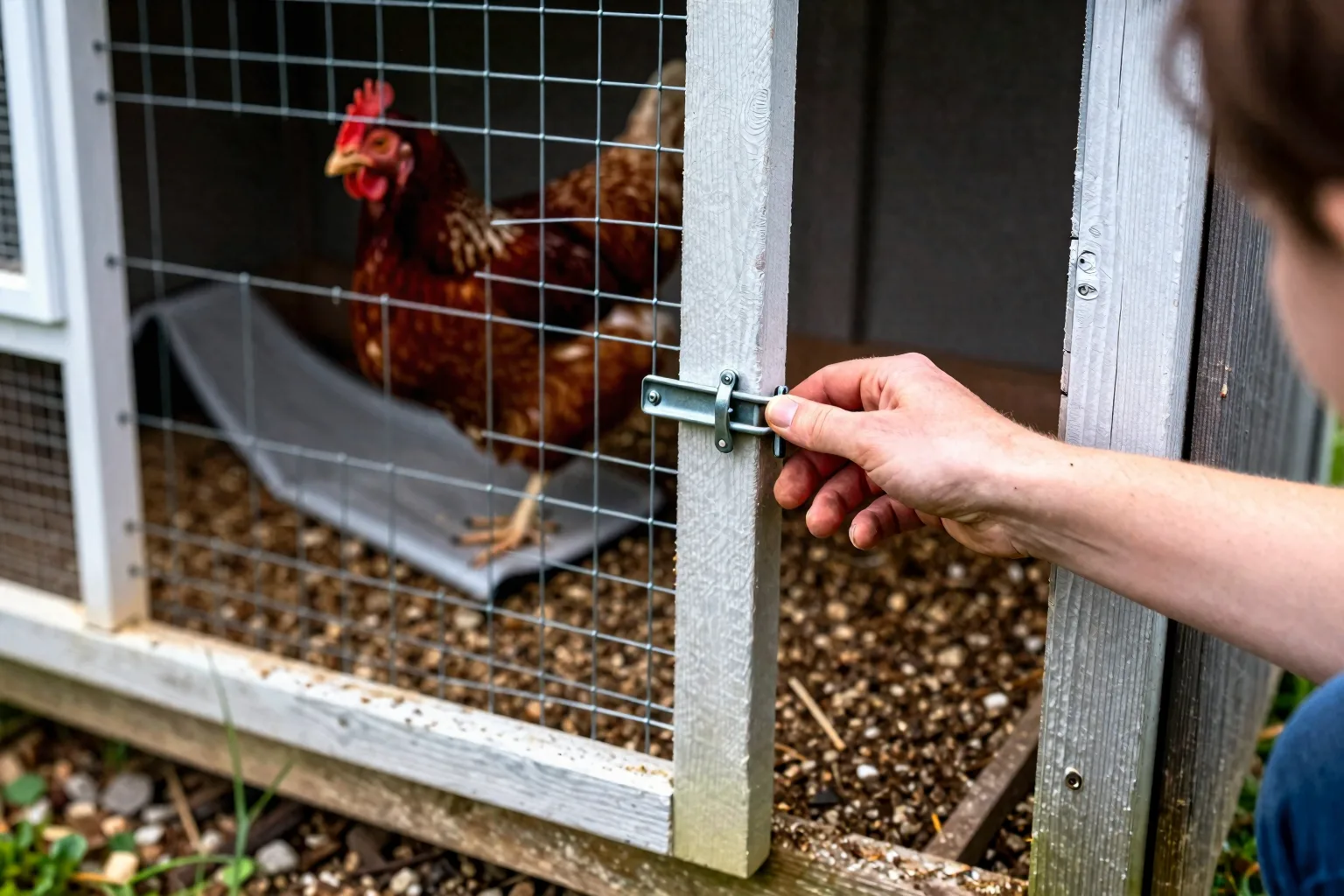
For a practical construction checklist, use How to predator-proof a backyard chicken run. It is better to build a smaller run that closes securely than a large run with a weak gate.
Weather can turn a manageable flock into an awkward one. Shade and extra water matter in heat. In a cold snap, the default approach is to improve dryness, block direct drafts while keeping high ventilation, prevent frozen water, and keep feed available. Supplemental heat adds electrical and fire risk and can make birds less prepared for a power failure; whether it belongs in your setup depends on the house, bird condition, climate, and local veterinary advice. The safest answer is not one temperature number for every coop.
Noise, odor, dust, feathers, and allergies matter to neighbors and household members. Serious injury, breathing trouble, persistent diarrhea, or sudden illness in multiple birds are reasons to contact a veterinarian or local extension office rather than rely on a home fix.
Use a 30-day pre-flock trial to make your yes or no
Before ordering chicks or buying pullets, test the job without birds.
- Week one: confirm local rules in writing, then mark the proposed coop and run on the ground.
- Week two: price the full setup and 12 months of feed, bedding, grit, shell, and repair supplies using current local tags. Add the cost of a caretaker.
- Week three: carry water along the planned route and practice the morning and evening routine. Open and close every latch. Clean the drinker.
- Week four: decide whether three or four hens will meet household egg use without creating a surplus you don't want.
At the end, choose one of three honest outcomes. Proceed with a small, secure setup if the rules, footprint, budget, and care plan all work. Delay if housing, drainage, predator protection, or travel coverage is still unresolved. Or decide that buying eggs fits your household better. That last choice isn't a failure. It is a good result from a useful test.
Do you need a rooster for eggs or hatching?
For eggs to eat, start with hens only. A rooster becomes relevant when you want fertile eggs for hatching, and it can add noise, feed, housing, and local-rule complications. The practical guide is Do you need a rooster for eggs or hatching?
How many chickens should a beginner start with?
Three or four hens is a practical starting group where local rules allow it, provided you can supply the required space and have a plan for surplus eggs. Start smaller only if your housing, caretaker plan, and household egg use support it.
What happens when backyard hens stop laying regularly?
Care continues through molt, winter slowdowns, and age-related decline. Don't build a budget that assumes peak production forever. Decide in advance whether older hens will remain part of the flock or be rehomed responsibly.
This week, measure the proposed run, call the local authority about rules, and write down the current price of a dozen eggs and a bag of layer feed. Put those figures into the worksheet, then revisit How much does it cost to feed backyard chickens each month? If the numbers still work after you include your time and backup care, you have a real yes, not just a hopeful one.
Frequently Asked Questions
Do you need a rooster to get eggs from backyard hens?
No. Hens lay unfertilized eggs without a rooster; a rooster is only needed for fertile eggs and can add feed, noise, housing, and local-rule complications.
How many chickens should a beginner start with?
Three or four hens is a practical starting group where local rules allow it, provided you can supply the required coop and run space and have a plan for surplus eggs and future care.
What happens when backyard hens stop laying regularly?
Care continues through molt, winter slowdowns, and age-related decline, so a realistic budget should not assume peak egg production forever; decide in advance whether older hens will remain pets or be rehomed responsibly.