Backyard Chicken Breeds: 9 Best Picks for Small Flocks
Three standard-size hens need roughly 12 square feet indoors and 24–30 square feet in the run at a sensible starting density. That calculation rules out more breed choices than a glossy colour chart does. When you’re comparing backyard chickens breeds, start with the yard your birds will actually use, then choose the temperaments, body sizes, and egg colours that fit it.
There isn’t one best breed for every small flock. A heavy, calm hen may be easier around children but use more feed and space. A smaller Leghorn may give you strong laying output from a lighter body but test a low fence and your patience. The table gives you a working shortlist, not a promise from a hatchery catalogue.
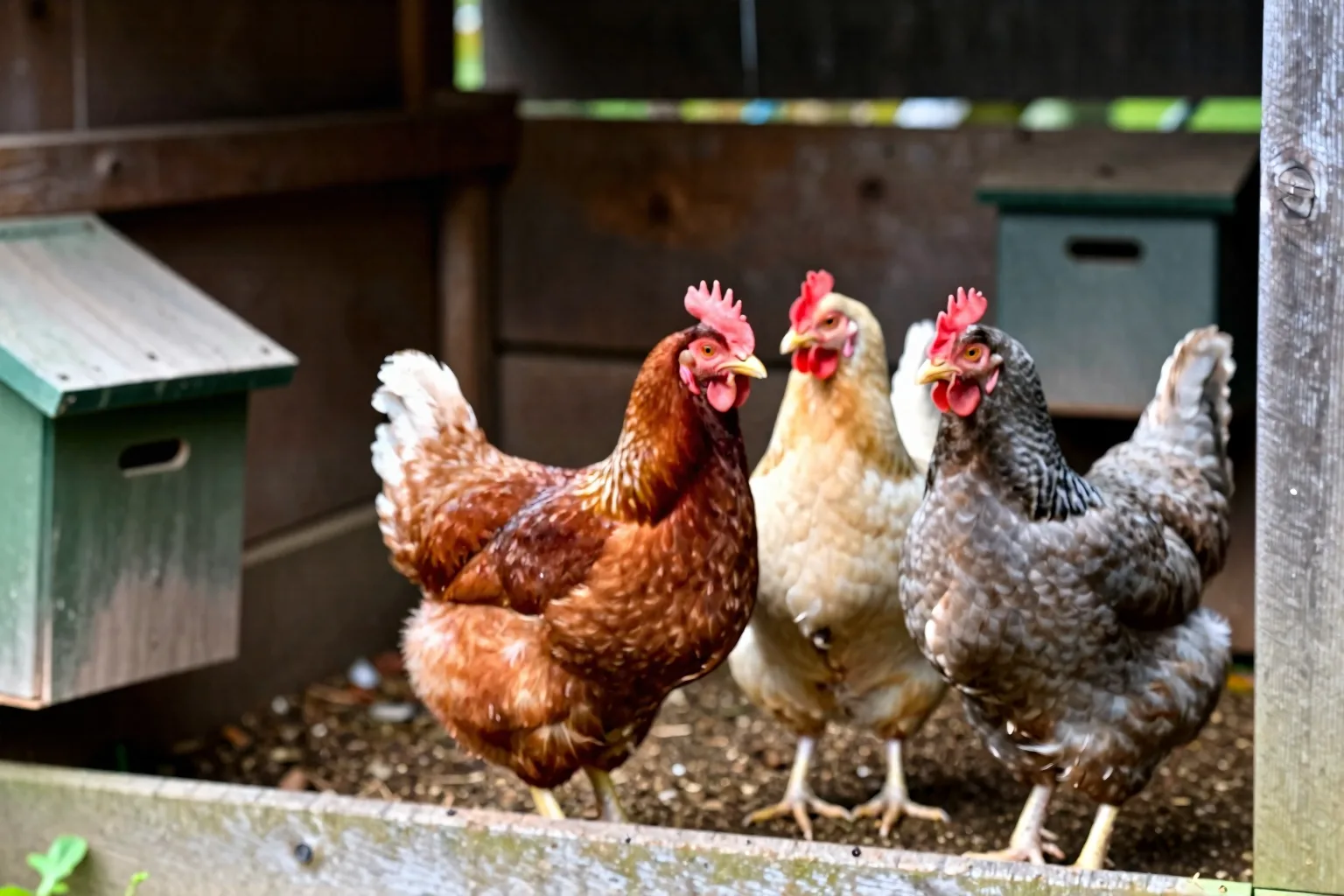
The shortlist at a glance: choose for your yard, not a leaderboard
The figures below are rounded planning bands. Egg numbers describe a good productive stretch, usually with young or mature hens in good condition. They are not an annual quota. Hatchery strain, age, molt, heat, winter light, feed, stress, and individual temperament can move the result in either direction.
| Pick | Approx. adult hen size | Eggs per week in a good laying period | Usual shell colour | Small-run fit | Climate or management watch-out |
|---|---|---|---|---|---|
| Buff Orpington | 7–8 lb | 3–5 | Brown to tinted | Good with shade and room | Large body and dense feathering |
| Sussex | 7–8 lb | 3–5 | Brown or tinted | Good if the run is secure | More active and curious |
| Australorp | 6.5–8 lb | 4–6 | Brown | Good all-purpose choice | Needs room to avoid crowding |
| Plymouth Rock | 6.5–8 lb | 4–6 | Brown | Good for a mixed flock | Large-bodied and feed-hungry |
| Rhode Island Red | 6.5–7.5 lb | 4–6 | Brown | Good with enough feeder space | Some lines are assertive |
| Easter Egger | 4.5–7 lb | 3–5 | Blue, green, olive, tan, or tinted | Good when sizes are matched | Colour and temperament vary |
| Welsummer | 5–6.5 lb | 3–5 | Dark terracotta brown | Conditional; secure the run | Active, alert, and ranging-minded |
| Leghorn | 4–5.5 lb | 4–6 or more | White | Good only with secure fencing | Flighty; large single comb |
| Wyandotte | 6.5–8 lb | 3–5 | Brown | Good with summer shade | Broad body and dense feathers |
Use about 4 square feet of indoor floor space and 8–10 square feet of run space per standard-size hen as the starting allowance used in this guide. That is not a magic line between healthy and unhealthy. A covered, dry run in a mild climate gives you more usable space than the same footprint in a wet area that turns to mud. If your birds stay confined for long stretches, extra room matters because they cannot spread their activity into a yard.
A 10-by-3-foot run gives you 30 square feet. Three standard hens fit the 24–30-square-foot starting range on paper, but a rainy season, a bullied bird, or a feeder placed in the middle can make that footprint feel much tighter. Put the feeder and drinker where a timid hen can step away, and plan a dry section rather than counting every muddy corner as usable run.
Buff Orpington and Sussex: calm choices for a family-facing flock
Buff Orpingtons suit you if handling tolerance and a steady presence matter more than squeezing out the highest possible egg count. A mature hen is a large bird, roughly 7–8 pounds in the planning bands above. In a productive period, 3–5 brown or lightly tinted eggs per week is a reasonable household expectation to plan around.
They tend to be less frantic than the active breeds on this list. That can make them a comfortable choice for a family-facing flock, especially if you want birds that are easier to guide into the coop. It doesn’t make every Orpington tame. A pullet raised with little contact can still avoid your hands, and a broody individual can stop laying while she sits.
The cost of that soft, heavy build is practical rather than theoretical. A big hen occupies more roost width, turns a small nest area into a traffic jam sooner, and has more body to keep cool. Dense feathering also makes shade, moving air, and several clean water points valuable during hot weather. Orpingtons can be a poor choice if your feed budget is already tight and you’re choosing purely by eggs per pound of feed.
Sussex hens give you a similar mature size and a brown-to-tinted egg, but they often bring more alertness and foraging energy. That can help if your run contains safe scratching areas or you allow supervised ranging. It can also mean more pacing at a gate, more interest in a neighbour’s garden, and more pressure on a weak latch.
For a close suburban yard, choose either breed when you can provide shade and a run that won’t become a narrow corridor. If your priority is gentle household interaction, the individual bird and the breeder’s handling practices deserve as much attention as the breed name.
Australorp and Plymouth Rock: balanced brown-egg layers for first flocks
Australorps and Plymouth Rocks are the practical middle ground for many first flocks. Both are standard-size, brown-egg birds with a useful balance of activity and composure. During a productive season, plan around 4–6 eggs per week per hen rather than a record figure repeated in an advertisement.
An Australorp can be a good fit if you want a bird that settles into a mixed flock without demanding the constant supervision of a flighty type. A Plymouth Rock offers the same all-purpose appeal, with a substantial frame and enough curiosity to use a run well without making escape attempts the centre of your daily routine. Neither description overrides the individual bird. A pushy hen can appear in a usually easy-going breed.
These are also birds where the housing numbers become real quickly. Three large hens need the same starting 12 square feet indoors and 24–30 square feet outside, but they fill that space with more body and scratching activity than three smaller hens. Roosts need enough width for everyone to settle without being shoved off. Feeders need enough access that a lower-ranking bird can eat without waiting until the flock leaves.
Cold weather doesn’t turn these breeds into winter machines. Egg production can still change as daylight, temperature, age, and body condition change. A second-year hen may lay less consistently than a pullet, particularly around molt or after a demanding laying season. That is why a three-hen household plan should include some slack rather than assuming three birds will produce the same number every week.
If you want brown eggs, manageable behaviour, and a forgiving first flock, these two are among the safest starting bets on the list. Their drawback is not temperament. It is the feed and floor space that comes with a larger bird.
Rhode Island Red: productive and hardy, with a line-quality caveat
Rhode Island Reds remain a useful choice when you want brown eggs from a sturdy, active hen. A standard-size hen is roughly 6.5–7.5 pounds in this planning comparison, and a strong laying period may produce about 4–6 eggs per week. Their active foraging style can be useful in a run with room to scratch, and their body and feathering can work well in a cold-weather flock.
The caution belongs beside the recommendation: production-oriented lines can be more assertive or more reactive than a beginner expects. That doesn’t mean every Rhode Island Red is difficult. It means you shouldn’t buy the breed label and assume behaviour is settled.
Ask the seller whether the birds were selected mainly for production, exhibition, or a mixed purpose. Ask how the parent flock behaves around people and feeders. If you can inspect the group, watch for a bird that repeatedly guards food, chases several flockmates, or keeps one hen away from shelter. One aggressive bird can disrupt a small flock regardless of breed, so don’t build your first group around a bird you already know is hard to manage.
Start with the same 4 square feet indoors and 8–10 square feet in the run per standard-size bird. Add more if the run is narrow, bare, or used all day. A Rhode Island Red can be productive and hardy without being the quietest or most passive bird in your yard.
Easter Egger: the practical pick when blue or green eggs matter
Easter Egger is a mixed-background type, not one tightly standardised breed with one fixed appearance. That is the reason the birds can differ so much in size, feather pattern, face shape, temperament, and egg shade. A reasonable planning range is about 3–5 eggs per week during a productive period, but the colour is the feature that usually brings people to this choice.
You may get blue, green, olive, tan, or another tinted shell. You may also get a bird sold as an Easter Egger that lays a paler or browner egg than you hoped. Ask the breeder or hatchery what colour the hen’s mother laid, what colour the father’s maternal line produced, and whether the seller is describing a tested laying family or simply a mixed-colour chick group.
A blue shell begins with shell-colour genetics. The bloom, which is the outer coating added near the end of shell formation, can make the finished egg look softer, chalkier, or more greenish than a bare shell would suggest. A photograph is a poor guarantee because light, camera settings, and the bloom itself change how a shell appears. Treat a promised colour as a probability attached to parentage, not a product specification.
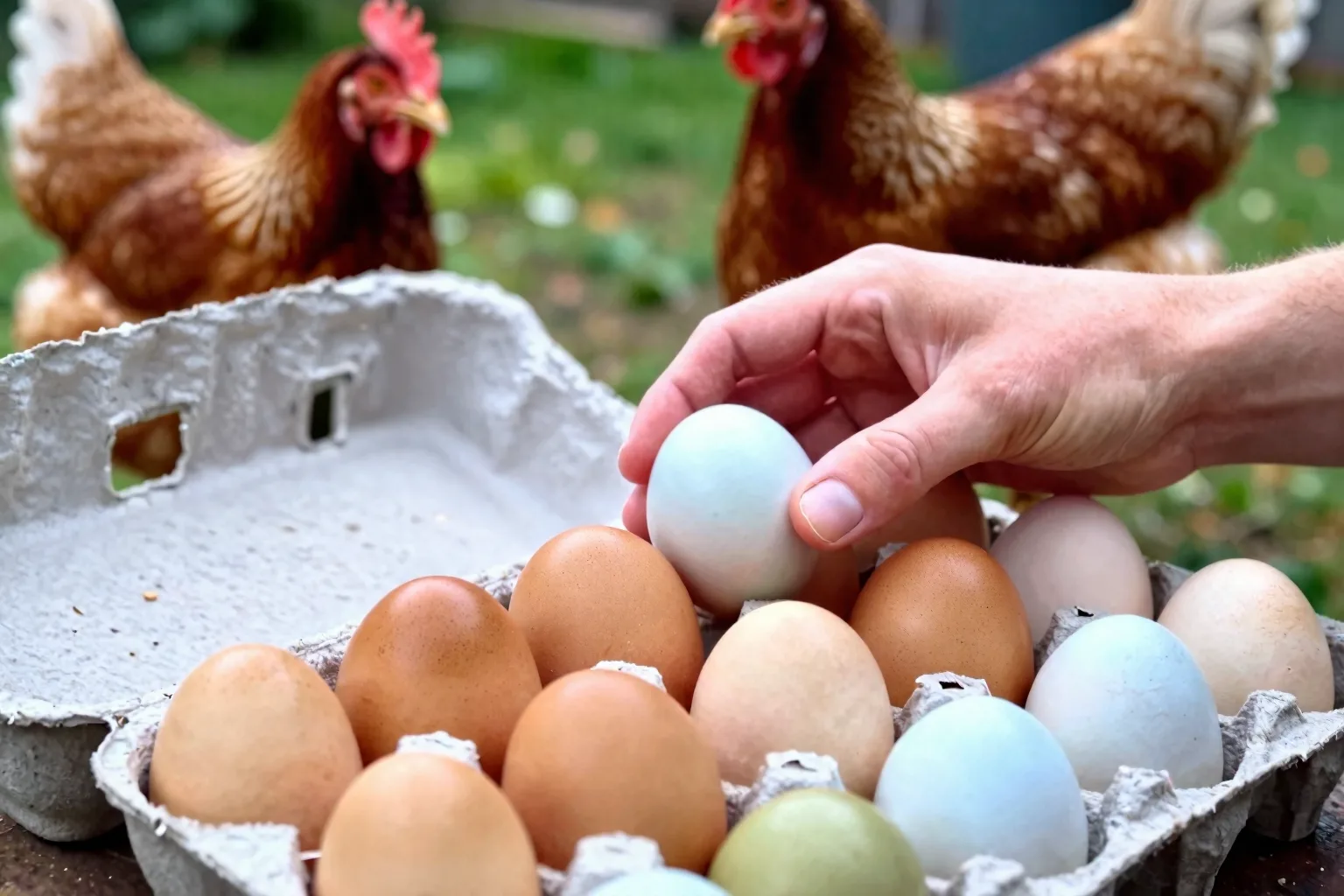
Easter Eggers can work well in a small flock because the type includes smaller and medium-sized birds. Match the new pullet’s size and temperament to the hens already in your run. A very timid, small bird can struggle beside larger, bossier hens even if the egg basket looks more interesting.
Choose this type if a colourful egg basket is worth accepting uncertainty. Don’t choose it if you need every bird to mature at the same size or you require a guaranteed blue shell.
Welsummer: dark brown eggs and an active ranging style
Welsummers are a good match for you if dark terracotta-brown eggs matter and you enjoy a bird that actively searches a run. Plan around a standard-size hen of roughly 5–6.5 pounds and about 3–5 eggs per week during a productive period.
They often use space differently from a heavy, settled bird. Expect more scratching, more inspection of the fence line, and more interest in whatever lies beyond the run. In a suburban yard, that can mean a more secure roof, taller fencing, or supervised ranging. A lightweight latch that is adequate for a quiet flock may not contain an alert bird that spends its day testing corners.
The dark shell is not a fixed paint colour. It varies between hens and can become lighter as a laying cycle progresses. If every egg in the carton must be the deepest brown, this breed may disappoint. If you value visible variation and active foraging, the same quality becomes part of its appeal.
Feed placement deserves attention with an energetic flock. Put food and water where birds can circulate rather than forcing them into one tight doorway. A Welsummer can be an excellent small-flock bird when the run is secure, but it is not the choice I’d make for a tiny open-topped pen beside a busy footpath.
Leghorn: high laying output for an active, well-secured run
Leghorns are the efficiency and output choice. They are smaller-bodied than the heavy brown-egg breeds, commonly planned at roughly 4–5.5 pounds for a mature hen, and they lay white eggs. A productive-season range of about 4–6 eggs per week, sometimes more in a strong laying stretch, is a useful way to think about them without treating a catalogue record as your household forecast.
The smaller body can reduce the feed required for maintenance compared with a much heavier hen, while the active breed type may spend more time foraging. That combination can suit you if eggs matter more than cuddling and the run is arranged for movement. It is a poor match for a keeper who wants birds that stand quietly at knee height or stay behind a low decorative fence.
Secure the run before you order the chicks. Check the roof, corners, gate gap, and the place where fencing meets the ground. The practical discussion in Hardware cloth versus chicken wire for a predator-safe chicken run belongs in your setup plan, not after a Leghorn has found the weak point.
Cold, damp weather adds a second consideration. A large single comb has more exposed surface than a small rose comb, so frostbite risk deserves attention in freezing conditions. Good ventilation above roost level, a dry roost, and no direct cold draft across settled birds matter more than sealing the coop airtight. You’re balancing moisture removal with protection from wind.
Pick a Leghorn when you can accept alert behaviour and build a genuinely secure run. If neighbours are close, remember that individual hens vary in vocal behaviour and a rooster is a separate noise decision.
Wyandotte: a cold-weather-friendly option that still needs summer planning
Wyandottes bring a broad, compact body, brown eggs, and a rose comb to the small-flock shortlist. Plan around a mature hen of roughly 6.5–8 pounds and about 3–5 eggs per week in a productive period. A rose comb presents less exposed surface than a large single comb, which can make cold-weather management simpler.
That is a cold-weather advantage, not frostbite-proofing. Dampness, poor ventilation, drafts at roost level, and extreme temperatures can still create trouble. Keep the roost dry, let moist air escape above the birds, and inspect combs and feet during a cold snap instead of assuming the breed has solved winter for you.
Summer is the counterweight. A broad body and dense feathering need shade, cool water, and moving air. A covered section of run is useful in rain and heat, but don’t turn it into a closed box. If your yard has hot summers and little afternoon shade, a Wyandotte may require more work than the winter label suggests.
Choose this breed when cold-weather planning is a priority and you can provide a cool summer retreat. It often suits a calmer mixed flock, but match individuals rather than treating a rose comb as a temperament guarantee.
Turn the list into a three-bird plan: climate, noise, space, and feed
A breed list becomes useful only when it ends in a purchase decision. Start by writing down the drawback your yard can absorb. In a tight suburban run, calmness may be worth more than one additional egg per week. In a secure rural run, active ranging may be a benefit rather than a nuisance.
The best breed is the one whose drawback your yard can absorb.
Here are three workable starting combinations:
- Close suburban yard: choose three calm-leaning standard-size birds such as an Orpington, Australorp, and Plymouth Rock. You’ll get brown or tinted eggs and a manageable all-purpose group. Provide shade and accept that these larger hens will use more feed than smaller active layers.
- Colourful egg basket: pair two brown-egg birds with one Easter Egger. This gives you a better chance of dependable brown eggs while leaving room for blue, green, olive, or tinted uncertainty. Match the Easter Egger’s mature size to the other two birds.
- High-output active group: consider Leghorns or a Leghorn mixed with a productive brown-egg type only when the run has a secure roof, reliable latches, and enough room for birds that stay busy. This is not the plan for a low fence beside a neighbour’s patio.
Three standard hens need about 12 square feet indoors plus 24–30 square feet of run at the starting density used here. A 4-by-3-foot coop interior gives 12 square feet. A 10-by-3-foot run gives 30 square feet. That can be a workable starting footprint in a dry climate with a covered area, but it gives you little spare capacity for mud, prolonged confinement, or a bird that needs to retreat from a flockmate.
Compatibility is more than matching egg colour. Standard-size hens usually have an easier time together when their body sizes and activity levels are reasonably close. Avoid placing one very small, timid bird with two large, persistent feeder-guarders. Provide more than one route to food and water, and use a gradual introduction for additions.
Before a new hen joins your residents, use How to quarantine and introduce new hens to a small flock as your separate checklist. Quarantine gives you a chance to watch appetite, droppings, breathing, comb colour, and external parasites before social pressure makes those signs harder to interpret. Introduction should let birds see one another before they are forced into the same tight shelter.
Predator protection is part of breed selection too. A calm Orpington may be less determined to test a fence, but that doesn’t make an open run safe. A Leghorn or Welsummer may expose a weak gate faster because it is more active. Use Hardware cloth versus chicken wire for a predator-safe chicken run to make the fence decision before the birds arrive.
Feed planning is simple enough to do before ordering. For standard layer feed, a commonly used starting range is about 1.5–2 pounds per hen per week. Treat that as a planning estimate, not a promise of consumption. Three hens at that range need about 4.5–6 pounds per week. Using 4.3 weeks as a planning month gives roughly 19–26 pounds per month. Waste, free-ranging, cold weather, breed size, age, and laying rate can move your actual purchase above or below that estimate.
For the running cost, use How much does it cost to feed three to twelve laying hens each month? Then replace its example price with the current bag price at your local feed store. Breed choice changes the estimate through body size and waste, but local feed price and how much ends up on the ground usually matter more than a small difference in weekly output.
- Measure the indoor floor and usable run area, excluding muddy corners and blocked access.
- Write down your summer shade and winter ventilation plan.
- Decide whether a secure roof and latch system can contain an active breed.
- Check local municipal zoning and animal-control rules for hens, roosters, coop placement, and noise before you order.
- Choose pullets from a seller who can explain the parent flock’s size, egg colour, and temperament.
- Keep the 1.5–2-pound feed estimate in your monthly budget and leave room for waste.
For breed type and recognised descriptions, compare seller claims with the American Poultry Association breed standards and recognized breed descriptions. For housing mechanics, pair that reference with university extension guidance on small-flock housing, ventilation, and climate care. Local rules still belong to your council or animal-control office; they can change from one address to the next.
Do you need a rooster for hens to lay eggs?
No. Hens produce eggs without a rooster. The eggs are unfertilised, so you need a rooster only if you want fertile eggs for hatching. A rooster also changes flock dynamics and can add noise, so check local restrictions and your neighbours’ tolerance before adding one.
Can you mix these nine chicken breeds in one small flock?
Often, yes, if the birds are introduced carefully and have enough feeder, drinker, roost, and retreat space. Similar adult size helps. So does a reasonably similar activity level. Quarantine new arrivals first, then use a gradual introduction. Don’t leave one much smaller or timid bird exposed to a pushy group simply because all the birds are standard breeds on paper.
Which backyard chicken breeds are quietest for suburban yards?
Keepers often choose Buff Orpingtons, Australorps, and Plymouth Rocks when calmer behaviour matters. That is a tendency to use for shortlisting, not a silence guarantee. Noise changes with the individual bird, stress, housing, flock disputes, and whether a rooster is present. If quiet is essential, ask the seller about the parent flock and plan the coop away from the closest property line where possible.
Your next action this week: measure your coop and run, write the usable square footage beside the three-bird space allowance, and circle the breed whose main drawback your yard can handle. If the numbers work, price enough feed for roughly 19–26 pounds per month at current local rates, then check your local hen and rooster rules before placing an order.
Frequently Asked Questions
Do you need a rooster for hens to lay eggs?
No. Hens lay unfertilized eggs without a rooster; keep a rooster only if you want fertile eggs for hatching and can manage added noise, flock dynamics, and local restrictions.
Can you mix these nine chicken breeds in one small flock?
Usually, standard-size hens can live together when they have similar temperaments, enough feeder and roost space, and a gradual introduction, but quarantine new birds and avoid leaving one timid or much smaller bird exposed to a pushy group.
Which backyard chicken breeds are quietest for suburban yards?
Buff Orpingtons, Australorps, and Plymouth Rocks are often chosen for calmer behavior, but noise varies by individual bird, stress level, housing, and whether a rooster is present; no breed guarantees a silent flock.