Disadvantages of Keeping Chickens: 9 Costs and Chores
Three hens can fit in a suburban yard, but they don't fit into a casual weekend hobby. You pay once for secure housing, then keep paying in feed, bedding, repairs, health care and time. The disadvantages of keeping chickens are manageable only when your setup and schedule have room for them.
For a flock of 3 to 12 hens, sort the commitment into five boxes: startup equipment, recurring supplies, daily work, seasonal work and local rules. You also need a secure run and a person who can check your birds every day. If one of those boxes has no workable answer, postpone the order. That isn't anti-chicken advice. It's a useful go-or-no-go test.
This article counts nine disadvantages. Feed and egg economics are separate points. So are cleaning, predators, health, neighbour issues and travel. Splitting them this way makes it easier to see which trade-off actually affects your household.
1. Coop, run, and equipment are the first major bill
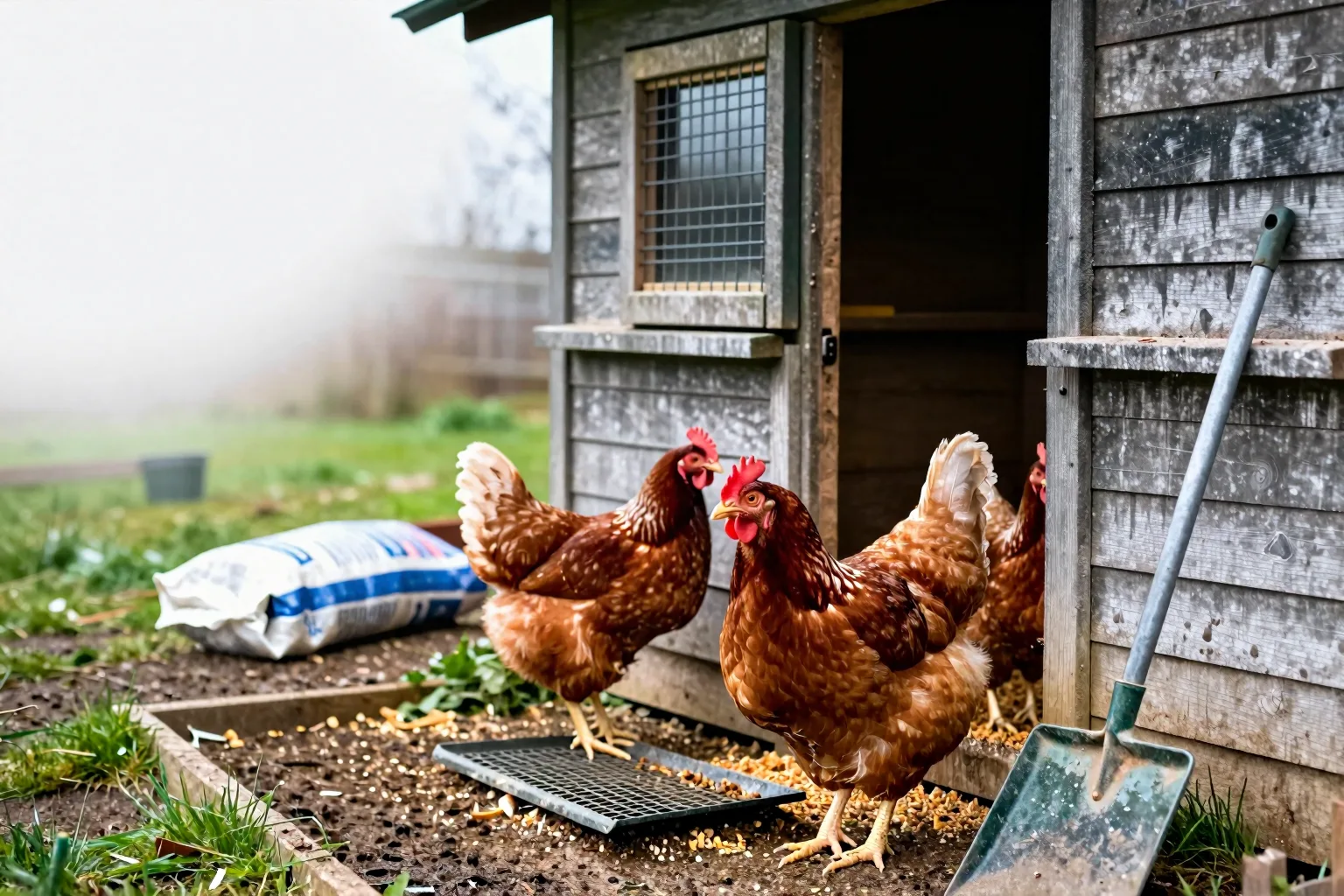
The first disadvantage is that chickens need infrastructure before they produce anything. Buying three birds does not mean paying for one-third of a coop. The door, roof, run perimeter, latch and quarantine space are mostly fixed costs.
Use this as a provisional worksheet in US dollars. These are not current market quotes. They are broad planning bands made by adding the items shown. Replace them with current prices from feed stores, builders' merchants and local sellers before you commit.
| Setup item | DIY or repurposed worksheet | Bought-in worksheet |
|---|---|---|
| Coop shell, roosts and nest boxes | $150–$500 | $400–$1,000 |
| Covered, predator-resistant run | $150–$600 | $350–$1,000 |
| Feeder and drinker | $40–$120 | $40–$120 |
| Bedding, grit and calcium to start | $25–$60 | $25–$60 |
| Quarantine crate and spare bowls | $30–$100 | $30–$100 |
| Worksheet total before birds | $395–$1,380 | $845–$2,280 |
A three-hen plan can therefore carry a much higher setup cost per bird than a ten-hen plan. If the same small setup totals $750, it is $250 per bird for three hens and $75 per bird for ten. That arithmetic doesn't mean you should crowd ten birds into a three-hen coop. Check the space calculation in How Much Space Do Chickens Need in a Backyard Coop and Run? first.
DIY can lower the cash bill, but it moves the cost into measuring, cutting, sealing, carrying and repairing. A repurposed shed still needs dry flooring, ventilation and a door that closes securely. Cheap chicken wire may contain a calm flock, yet it leaves openings that a predator can pull through or damage. A flimsy latch is another false saving. Replacing a section of run after a failure costs more than pricing the barrier properly at the start.
2. Feed keeps costing money; 3. home-raised eggs do not automatically save it
Feed is a recurring bill, not a background detail
For a planning calculation, use roughly 100–150 grams of complete layer ration per adult hen per day. Breed, body size, cold weather, forage, treats and spilled feed can move the real figure. Multiply your chosen daily allowance by bird count and 30 days:
- Three hens: about 9–13.5 kilograms per month.
- Six hens: about 18–27 kilograms per month.
- Twelve hens: about 36–54 kilograms per month.
Then multiply kilograms by your local price per kilogram. As a made-up maths example, a price of $0.60–$1.20 per kilogram would put feed alone at roughly $5.40–$16.20 for three hens, $10.80–$32.40 for six, or $21.60–$64.80 for twelve. Check the current bag price, bag weight and ration type locally. A 10% allowance is a sensible worksheet adjustment where rodents, rain or enthusiastic scratching regularly waste feed.
Treats and free forage may change how quickly the feeder empties, but they don't remove the need to offer a suitable complete ration. Add separate lines for grit and calcium, bedding, replacement drinkers, repairs and feed storage. For a first budget, a provisional $10–$30 monthly line for those smaller supplies is more useful than pretending the feed bill is the whole running cost.
Eggs are fresh, but not automatically cheap
Small flocks spread fixed costs badly. The coop, run, latch and your daily checks still exist if three hens give you fewer eggs than expected for a stretch. Production also changes with age, molt, broodiness, illness, daylight and heat.
Take a simple household example. If three hens collectively provide 12 eggs each week, a four-week month gives you 48 eggs, or four dozen. Compare four dozen at your local supermarket price with feed, supplies, the setup, and your time. If you choose to spread a hypothetical $750 setup over 36 months, that accounting choice adds $20.83 per month before feed. It isn't a promise that the birds will be cheaper. It shows why a home-raised egg is a food cost plus a care obligation.
For a rebuildable budget, use Backyard Chicken Monthly Cost for 3, 6, and 12 Hens and replace every example price with today's local figure.
4. The work is daily even when the flock is small
On an ordinary day, your routine is short but non-negotiable. Check that water is clean and available. Provide or inspect feed. Collect eggs. Look at each bird long enough to notice a change in posture, appetite, droppings or breathing. Secure the flock at night if your housing routine requires it.
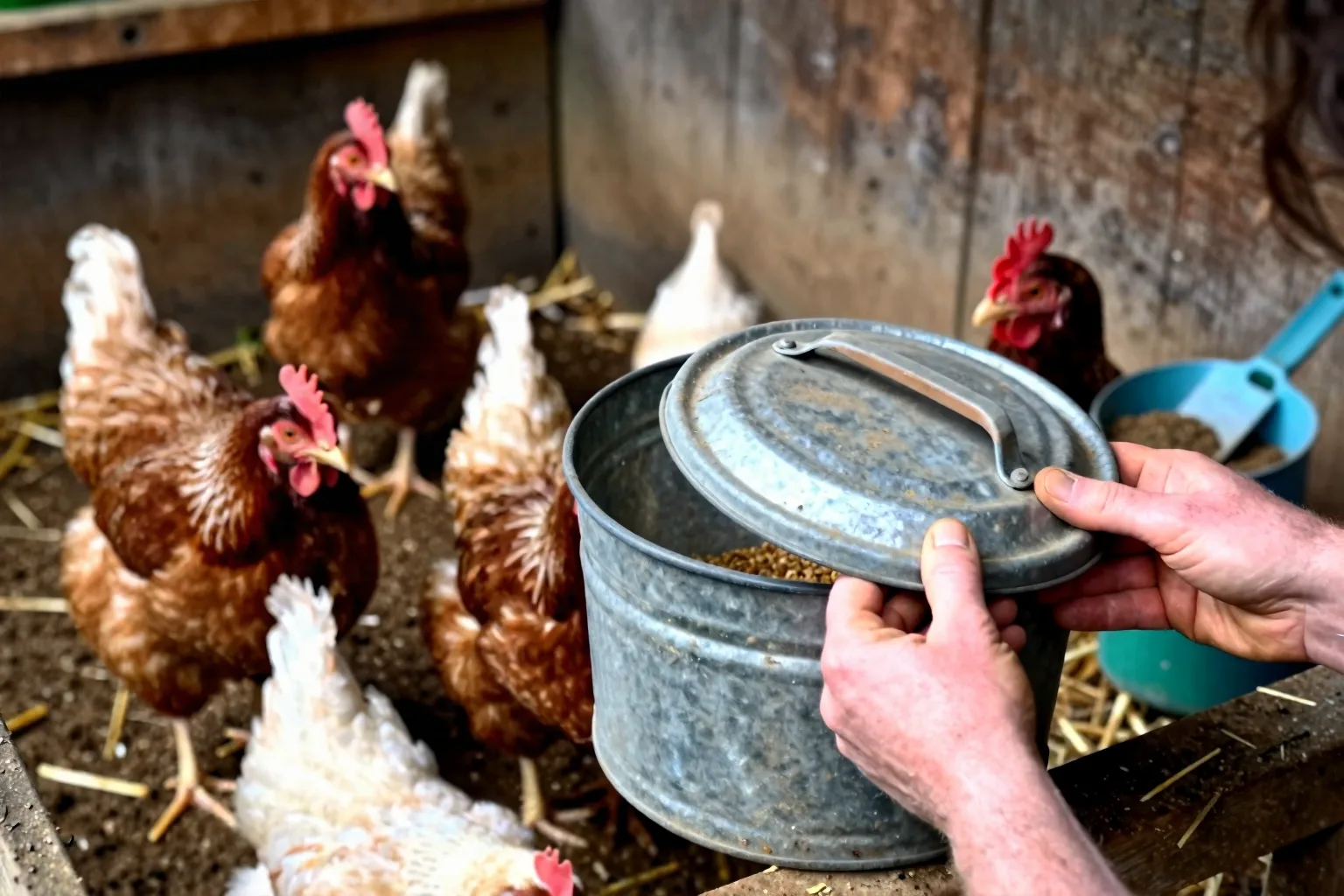
As a planning figure, allow 10–20 minutes on a normal day for three to twelve hens. Fifteen minutes daily is 7.5 hours over a 30-day month. Add time for weekly bedding work, drinker scrubbing, fence checks and monthly repairs. Mud, a broody hen, a molt, an injured foot or a blocked drinker can turn a quick visit into a longer job.
Hot weather means checking shade and water more often. Freezing weather can turn a drinker into a solid block. During molt, a bird may need closer observation and a calmer routine. An ill bird needs isolation and extra checks. Those are not rare add-ons to the plan; they are reasons your backup caretaker needs clear instructions rather than a key and a bucket of feed.
A gravity feeder does not replace a person. It cannot tell you that one hen is sitting apart, that the door has blown open or that the water has frozen. Before you buy birds, identify one backup caretaker and write down the morning, evening and emergency steps.
5. Manure, dust, flies, and bedding create a recurring cleaning job
Chickens turn a small area into a concentrated waste site. Most manure lands beneath the roosts, where wet bedding can compact and smell. Spilled feed attracts rodents. Dust settles on nearby surfaces. Rain turns the route to the run into mud, while flies gather where moisture and waste remain together.
A sharp ammonia smell is a process warning, not a normal target. Wet litter, poor airflow, crowding and feed waste reinforce one another. Improve drainage, remove wet patches, keep litter dry and make sure air can move above bird height without creating a direct cold draft at the roost.
A workable rhythm is simple:
- Spot-remove wet bedding and obvious manure during routine checks.
- Once a week, inspect the area beneath the roosts and clean drinkers and feed surfaces.
- Once a month, check the whole floor, corners, nest boxes and run entrance for dampness, pests and compacted waste.
- Compost or dispose of manure where runoff will not reach a neighbour's yard, drain or vegetable bed at the wrong time.
For a first budget, price one local bag or bale of bedding every two to four weeks for three to six hens, then record actual use. A twelve-hen flock may need one every one to two weeks under the same material and weather assumptions. Those are starting lines for a worksheet, not promises. Bedding size, litter depth, coop design and rainfall can change the result sharply.
Deep-litter systems can reduce daily scraping because dry material absorbs and dilutes fresh waste. They still need monitoring, added dry material and periodic removal. “Less daily work” is not the same as “no cleaning.”
6. Predator protection is an infrastructure and maintenance cost
A secure run is not a one-time purchase. Raccoons, dogs, foxes, hawks and rodents present different access problems. A paw reaching through mesh, a dog pushing a loose panel, a hawk dropping through an open roof and a rat entering through a feed gap are not solved by the same repair.
For a suburban run, price small-mesh welded hardware cloth for doors, lower walls and reach-through zones. Its welded construction gives you a more rigid barrier than ordinary thin chicken wire. Read Hardware Cloth vs. Chicken Wire for a Predator-Proof Run before choosing the cheapest roll.
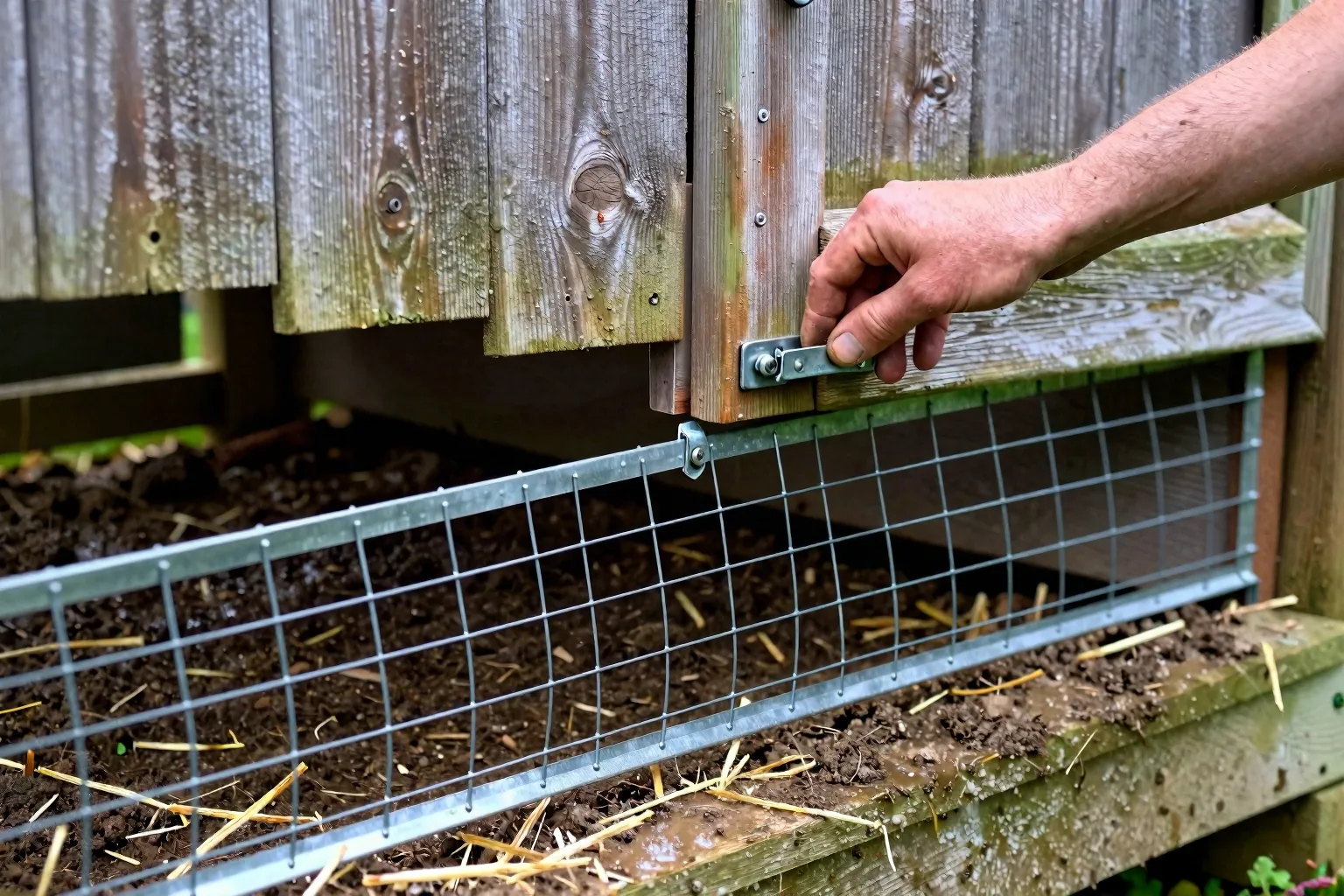
Build protection in layers. Cover the run overhead where hawks are a concern. Fit a door that closes without a gap. Use a two-step latch if local animals can work a simple hook. Add a buried or outward-turned mesh skirt; a 12-inch starting skirt is a practical item to price, though digging conditions and local predators may call for a wider or deeper barrier. Store feed in a closed container so rodents don't turn the run into their food source.
Free-ranging can give your birds more room to scratch and may reduce some purchased forage. It also increases exposure to dogs, hawks, roads, poisonous plants, neighbours and weather. It does not remove the need for a secure overnight area. My judgment is blunt here: treat free-ranging as an optional privilege, not as a substitute for a proper run.
Inspect after storms, heavy digging, snow, fallen branches and fast vegetation growth. Look at the bottom edge, every staple, every hinge and the place where the run meets the coop. A barrier is only as secure as its newest loose corner.
7. Health problems bring quarantine, replacement, and vet decisions
A small flock still needs a sick-bird plan. Keep a crate or pen that can be separated from the main coop, plus spare bowls and a way to wash your hands before returning to the flock. Treat that space as part of the original setup rather than an emergency purchase.
Use this symptom-to-action framework:
| What you notice | First action |
|---|---|
| One bird is quiet but still eating | Check water, feed, crop, feet, droppings and the environment; isolate if the change persists. |
| Breathing difficulty or repeated regurgitation | Separate the bird and seek prompt veterinary advice. |
| Severe diarrhea, inability to stand or neurological signs | Isolate, protect the rest of the flock and contact a poultry veterinarian or local extension office promptly. |
| Serious wound, suspected egg-binding or rapid decline | Keep the bird warm and quiet while arranging urgent professional advice. |
Mites, parasites, crop problems, egg-binding and injuries can look similar at first glance. Don't choose a medication or dose from a photograph or a neighbour's old bottle. Use the product label and ask a poultry veterinarian or local extension office about diagnosis, withdrawal instructions and flock-wide treatment. The phrase veterinary or extension guidance on poultry biosecurity is a useful place to begin your research.
Keep newcomers separate while you observe them and follow local veterinary advice; a practical household plan should reserve at least 14 days for separation, with a longer period if professional guidance calls for it. Health costs are hard to cap because examination, testing, treatment, transport and replacement decisions arrive together. Set aside a written reserve before ordering birds, even if you hope never to use it.
8. Noise and local rules affect neighbours; 9. travel and weather reduce flexibility
Noise and rules are outside your control
Hens make noise when they lay, argue over a perch or announce a disturbance. A rooster adds a more persistent call, so keeping one is a separate neighbour decision. Odor can drift, birds can escape, and feed storage can attract complaints even when the coop itself is tidy.
Local rules may address flock size, rooster ownership, coop placement, setbacks, permits, waste and nuisance complaints. Those rules can differ between a city, county and homeowners' association, and they can change. Check the current municipal or county zoning, animal-control and nuisance pages before buying birds. A suitable yard is not the same thing as a legal setup.
Holidays and weather need a person, not a gadget
A weekend away still requires a daily visit. Your caretaker needs to check water, feed, fencing, bird condition and the closing routine. Leave written instructions, a spare key, the feed location, the vet contact and permission to call you before the first trip.
Heat waves increase the importance of shade and water checks. Cold snaps can freeze water and expose drafts or leaks. Smoke, storms, flooding, snow and molt can all change the routine. Read Winter Chicken Care Without Supplemental Heat before cold weather arrives, then test the plan on an ordinary day rather than waiting for the forecast to become difficult.
Here is the decision test to complete this week:
- Check current local rules and write down whether hens, roosters and your proposed coop location are allowed.
- Measure the proposed coop and run, then price a secure build rather than the cheapest enclosure.
- Use your local feed price to calculate one month for 3, 6 and 12 hens.
- Put a quarantine crate, cleaning supplies and a health reserve on the same shopping list.
- Ask a backup caretaker to agree to daily visits, including during a heat wave or cold snap.
If you cannot complete one of those steps, wait. Chickens are rewarding for the right household, but the best setup is the one that still works on a wet Tuesday when nobody feels like going outside.