Chicken Run Predator Protection: 7 Fixes That Hold Up
A two-inch gap under a run gate can undo an otherwise careful build. Put your fingers under the lower edge. If the mesh lifts, a digging animal has a starting point. Chicken run predator protection works when you close the route a particular animal can use, not when you add one dramatic gadget.
Walk the perimeter before buying wire. Look for a paw-sized reach-through opening, a place a climber could grip, soft soil beside the wall, and open sky above the birds. The smallest credible predator and the strongest digging pressure in your yard set the standard.
These seven fixes build in layers. They won’t promise a predator-proof run forever, but they give you a setup you can test, repair, and improve.
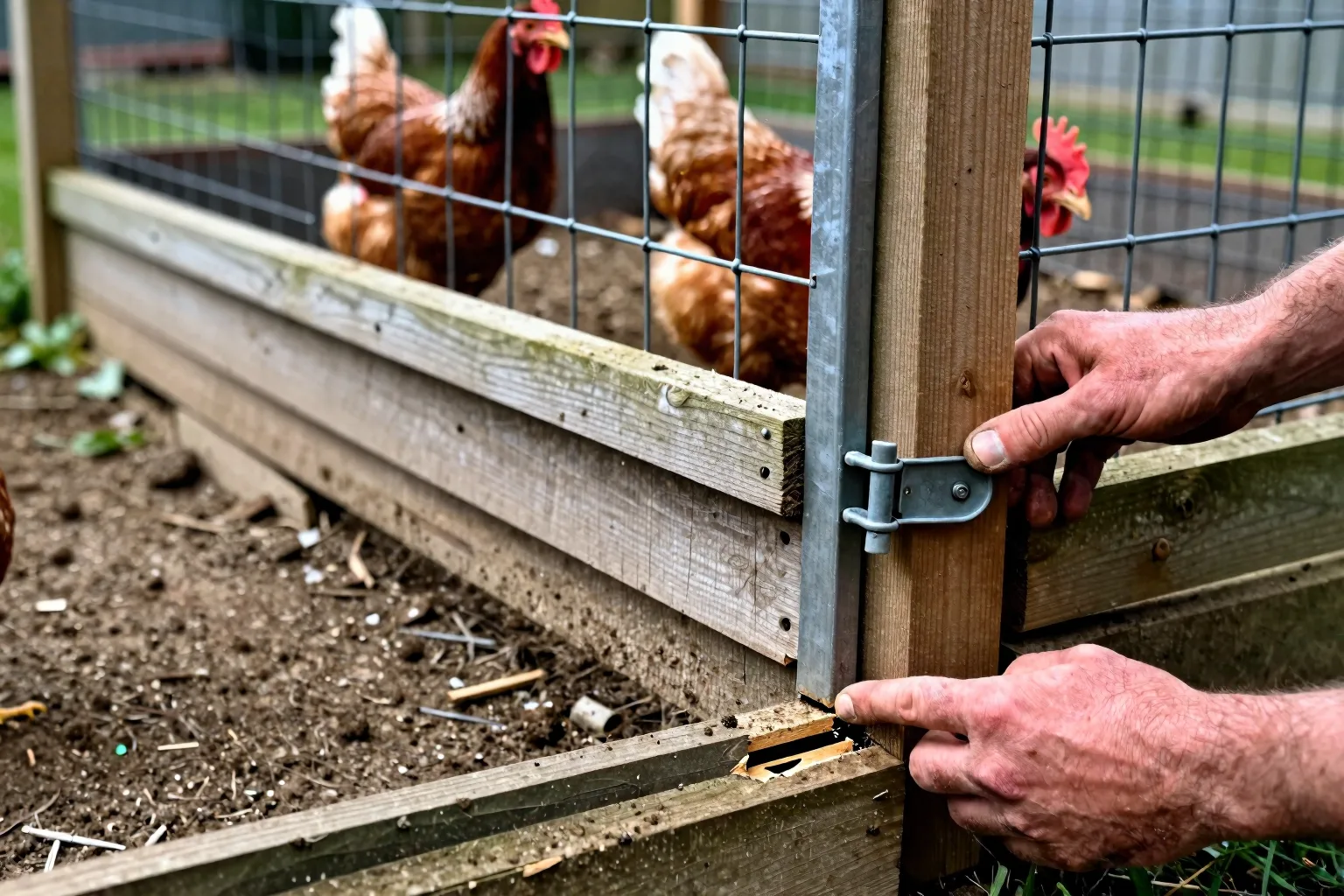
Fix 1: Match the barrier to the predator at your fence line
At the fence line, make a short threat list. Hawks and owls use the air. Raccoons climb, reach, and work at simple latches. Foxes and dogs push and dig. Weasels, snakes, and small rodents can use openings that look too small for a hen.
| Threat | Route to close | Practical match |
|---|---|---|
| Hawks or owls | Open sky | Welded roof and covered refuge |
| Raccoons | Reach, climb, latch | Tight mesh and two-step latch |
| Foxes or dogs | Digging and pushing | Strong lower wall and outer apron |
| Weasels or snakes | Small openings | Smaller mesh where credible |
For a mixed-threat yard, one cheap barrier rarely handles every route of entry. A roof without a sound base still leaves a digger’s route. A buried skirt without a roof leaves the birds exposed from above.
Make the worst credible route your starting point, then add the layer that closes the next route. That is usually cheaper than rebuilding a run after adding the wrong material.
Fix 2: Replace chicken wire where a predator can touch your birds
Chicken wire is useful for containing chickens, but it is a poor exclusion barrier where a predator can touch the mesh. Its lighter construction and open pattern can be pushed, cut, or reached through more readily than a tightly fastened welded panel.
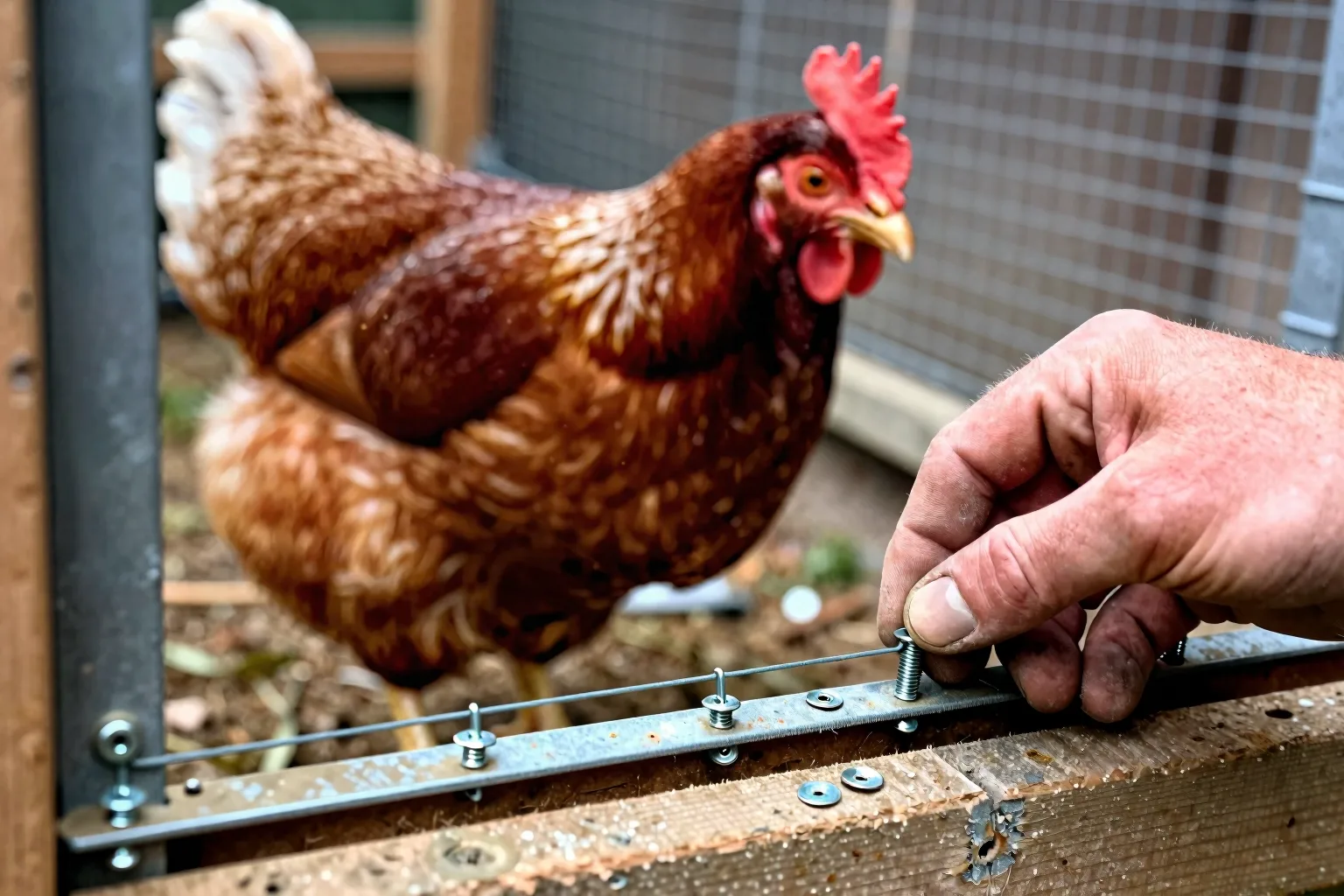
A sensible general choice for a backyard run is 1/2-inch hardware cloth, about 13 mm. Use 1/4-inch mesh, about 6 mm, where weasels, snakes, or small rodents are credible threats. In a high-pressure area, heavier-gauge wire is worth considering, especially around the lower wall, gate, and corners.
Overlap seams by at least 2 inches. Fold cut edges under or trap them beneath framing. Fasten the mesh with washers and screws, or with robust staples set close enough that a claw cannot peel the panel away between fasteners.
Picture a 6-by-10-foot run for six hens. The wall may use the right 1/2-inch mesh, yet a 3-inch gap beside the gate still gives a reaching predator an access point. An opening smaller than a chicken is not automatically too small for a paw, snout, or narrow body.
Fix 3: Put the dig barrier outside the run, not only below its posts
An outward-facing apron works by putting wire on the ground beyond the wall. Extend hardware cloth about 18 to 24 inches from the run, pin it flat, and keep it continuous along the outside edge. A digger starts at the wall, meets the horizontal wire, and loses the straight path underneath.
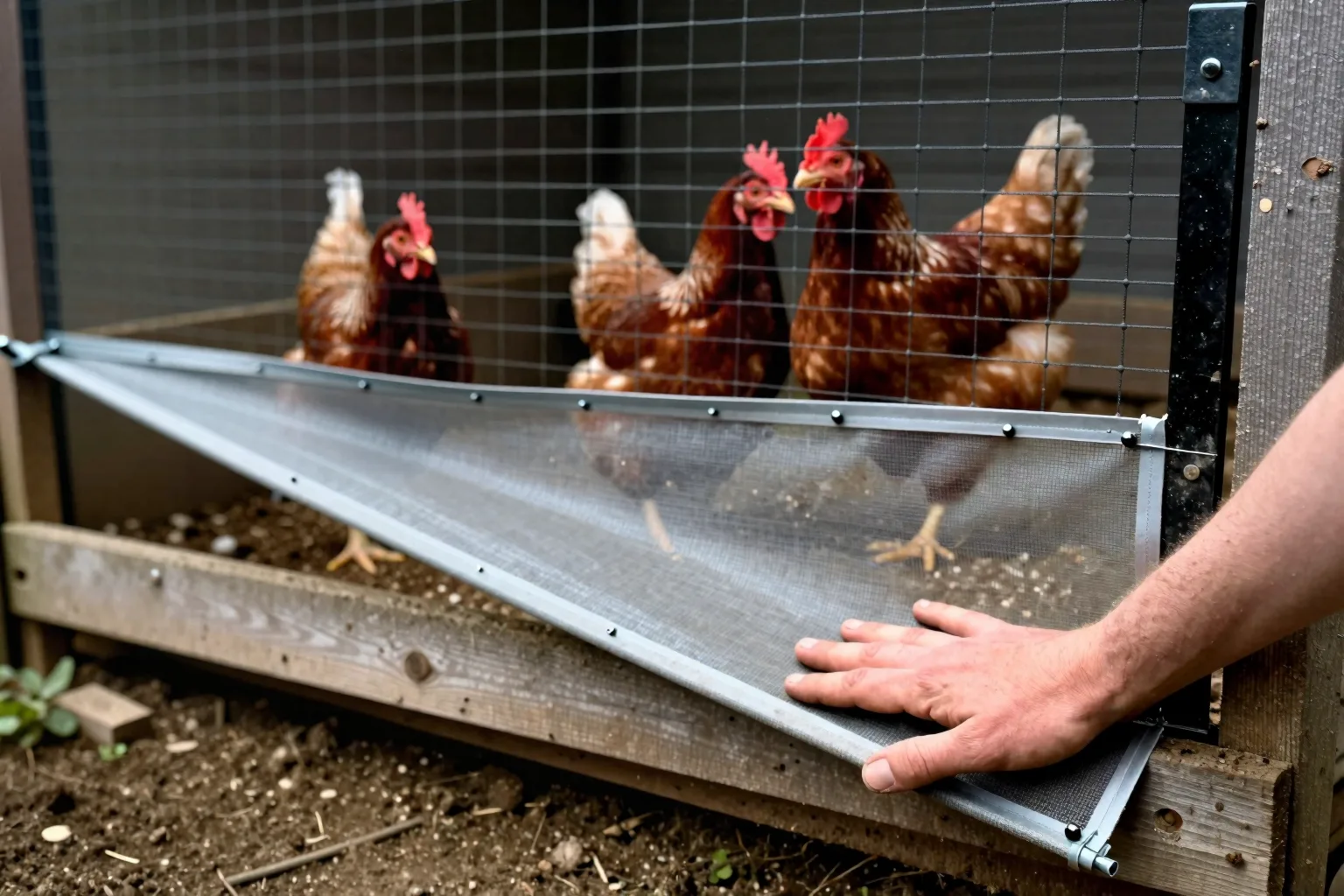
A buried skirt uses a vertical barrier instead. Bury hardware cloth roughly 12 to 18 inches below grade, then fasten its top edge firmly to the run wall. This suits a tidy build, but you must verify that the buried section has not lifted, rotted loose, or been bypassed by uneven ground.
Soft soil and repeated digging pressure justify the wider apron or deeper skirt. Uneven ground may require extra pins, careful grading, or a buried section where a flat apron would leave a channel. With fox or dog pressure, stiffen the lower wall as well as adding wire below it.
Continue the barrier around corners, gate openings, and the wall where the coop meets the run. Those transitions are easy places to leave a short gap. The practical judgment for a DIY backyard run is to favour an inspectable apron over a deeper barrier you cannot check, unless the ground or predator pressure makes burial the sounder choice.
Before digging, check your local agricultural extension office's published housing guidance if frost, soil, or local construction rules complicate the choice.
Fix 4: Close the top and build a refuge birds can reach fast
If hawks or owls patrol your yard, close the full run with welded mesh or a rigid roof. A roof also matters where climbing animals could reach the top edge. The barrier must cover the entire run, not just the area above the coop door.
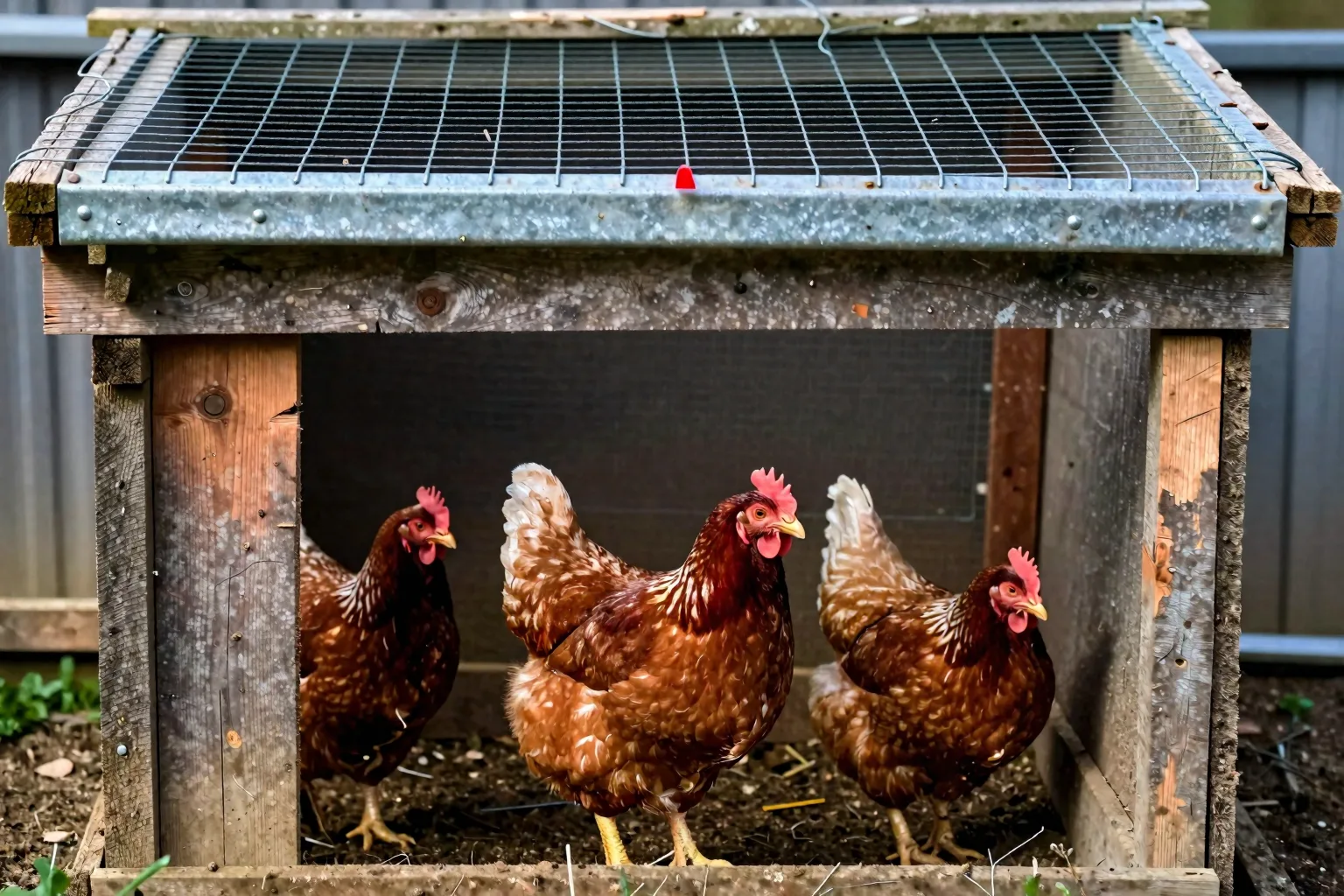
A wire roof preserves airflow and lets you see through the run. A solid-roof section adds shade and shelter from rain, but it needs enough ventilation at the sides. Fasten the roof-to-wall seam with the same care as the lower panels. A loose top edge is still an entry route.
Give your birds a low, open-sided refuge inside the run. It could be a covered panel, a short lean-to, or a box with more than one easy exit. Every bird should be able to reach cover without crossing a long exposed lane or being trapped in a single narrow doorway.
Lightweight bird netting may deter some aerial visits, but it is not a rigid barrier for a climbing predator. For a raccoon-prone run, use welded mesh or a rigid roof. The practical details of roof cover and refuge placement are also covered in Hawk protection for backyard chickens: roof, cover, and flock-safe hiding places.
Fix 5: Turn the coop door into a two-step latch
A single hook or easily lifted slide bolt is a weak point against a raccoon that can pull, paw, and repeat an action. Use a latch that needs two separate actions, such as a hasp secured with a spring-loaded clip or carabiner.
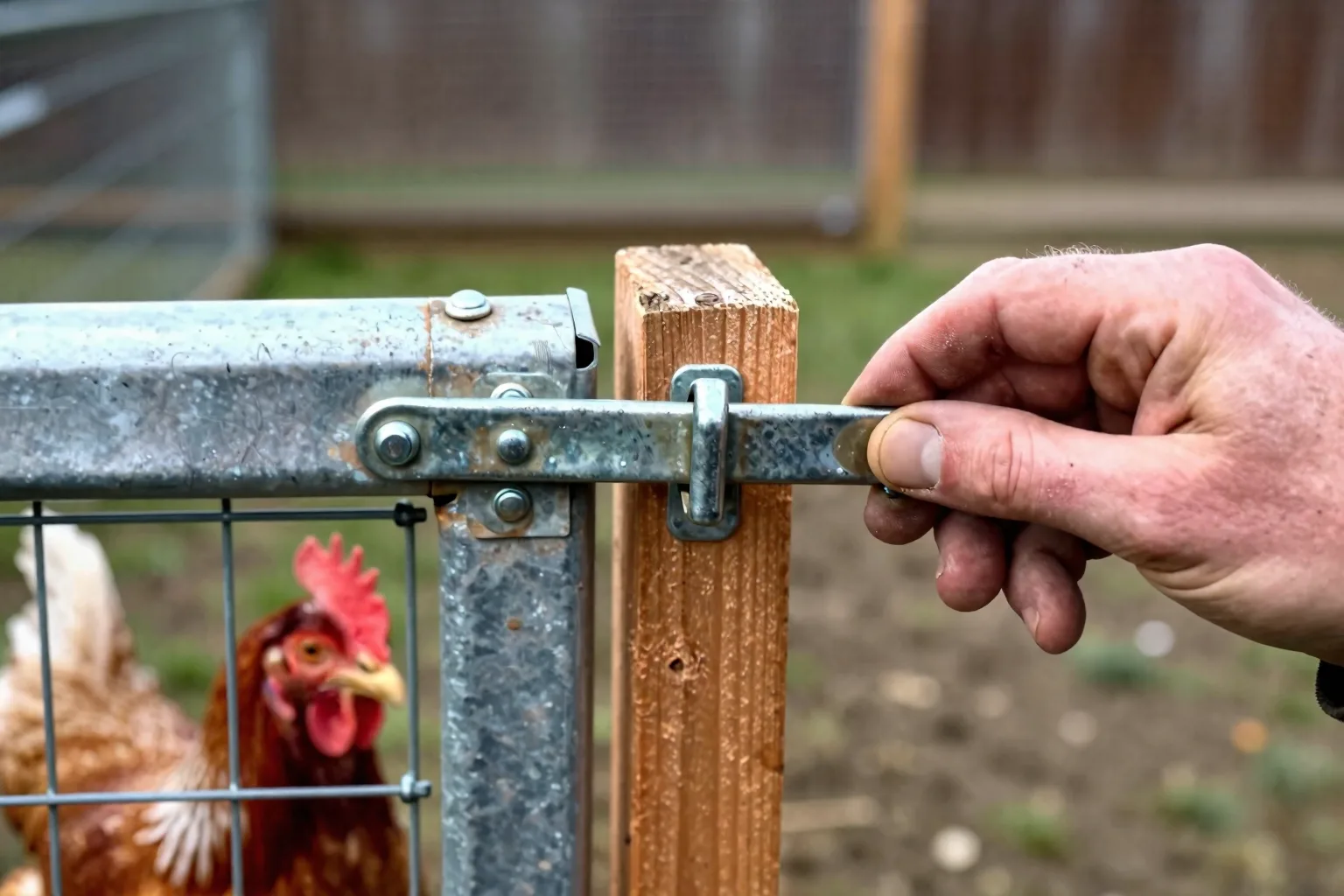
Check the whole door, not just the latch. A flexible frame can move away from a secure catch. Cover gaps beside the door, protect hinge-side openings, and fasten flexible panels so they cannot bow outward. A strong latch on a weak frame is a strong-looking failure.
Lock your birds into the coop at dusk. Treat an automatic door as a convenience, not the whole protection plan. Keep a manual backup and check the door from outside. For sizing, timing, and backup checks, see Automatic chicken coop doors: sizing, timing, and backup checks.
Fix 6: Remove the nightly reward: feed, eggs, rubbish, and easy water access
Attractant control is a short evening job. It reduces the reason for an animal to keep testing the run.
- Store feed in a lidded, chew-resistant container.
- Remove or secure feeders overnight.
- Sweep spilled grain from beneath the feeder.
- Collect eggs before dark.
- Keep rubbish and open compost away from the run.
- Keep water available for your birds; move it inside the protected coop or run rather than withholding it.
Cleaner habits can reduce easy rewards and rodent pressure, but they cannot replace mesh, a roof, or a dig barrier. The evening check is simple: birds in, door latched twice, feeder secured, eggs collected, spill swept, gate touched.
Fix 7: Run a hand-and-flashlight inspection after every storm
Once a week, test the finished run with your hands and a flashlight. Do it again after strong wind, snow, flooding, digging, or any repair.
- Push and pull every wall panel, gate, and lower corner.
- Shine the light along the base, apron, coop wall, and gate threshold.
- Check roof seams, fasteners, hinges, and flexible panels.
- Test the latch from outside without opening the door.
- Look for disturbed soil, bent mesh, loose staples, feathers, scratches, or tracks.
The test is useful because your hands find movement that a visual check misses. A lifted apron, bent corner, or loose screw is easier to correct before an animal learns that the gap is there.
For tracks, feathers, and attack marks, use How to identify a chicken predator from tracks, feathers, and attack marks. If a bird is injured, contact a veterinarian. If you have an actual attack, an uncertain wildlife identification, or a trapping question, use state wildlife agency or USDA wildlife-damage guidance instead of repeating guesses. Local rules may control relocation, trapping, and electric fencing.
Three add-ons that don’t replace the barrier
These tools can support the seven fixes. None closes every route by itself.
Are motion-activated lights enough to protect a chicken run?
No. A motion light may startle an animal briefly, but it doesn’t close a reach-through opening, stop a digger, or block an overhead hawk approach. That is the same rule seen in the main build: for a mixed-threat yard, a single inexpensive barrier rarely closes all routes at once. Use lights as a supplement to mesh, roof cover, and dusk lock-up.
Does electric fencing replace a buried apron?
Treat a correctly installed electric strand as an outer layer, not a replacement for the run’s own barrier. Its effectiveness depends on grounding, vegetation control, and a setup that avoids exposing children, pets, or birds to avoidable risk. Check local electrical-safety and property rules before installing it. The physical wall and dig barrier still close routes the strand may not reach.
Can bird netting keep raccoons out?
Not as the primary barrier where raccoons can climb or reach. Netting may provide overhead deterrence, but flexible material does not make a rigid wall or roof. Use welded mesh or a rigid roof where a climbing predator is part of the local risk.
Your next action this week: choose the strongest credible route at your fence line, then install the matching mesh, outer apron or skirt, roof cover, two-step latch, and evening routine. Test every seam by hand. If you are still laying out the footprint, pair this checklist with How much coop and run space do 3 to 12 hens need? A barrier is easier to inspect when you can walk its full perimeter.