Best Predator Proof Chicken Coop: 5 Picks by Flock Size
Four square feet of indoor floor per hen and ten square feet in the run is a useful starting line. But a coop can meet those numbers and still leave a gap under the door, a weak latch, or an open roof edge that defeats the whole purchase.
The best predator proof chicken coop is a secure system, not a box. Your coop shell, enclosed run, mesh, roof, ground protection, latches, and anchors have to work together. Here are five practical picks: compact plastic for 3–4 hens, mid-size plastic for 4–6, a separate coop and walk-in run for 6–8, a large plastic shell inside a custom run for 8–10, and a DIY shed-plus-run for 10–12.
The best predator-proof chicken coop is a secure system, not a box
Start with the flock you intend to keep, not the maximum number printed on a product page. For adult hens that reach an enclosed run every day, plan on about 3–4 square feet of usable indoor floor and 8–10 square feet of run per bird. If your birds will be confined during wet weather, snow, heat, illness, or local restrictions, use the generous end of those ranges or build beyond them.
Usable floor means the space birds can actually stand, walk, turn, and rest on. Don’t count a nest box that projects into the room as though it were open floor. Roosts help your birds use vertical space, but they don’t remove the need for enough floor area around the feeder, drinker, and pop door.
- 3–4 hens: a compact molded-plastic coop with a properly enclosed run.
- 4–6 hens: a mid-size plastic system, provided its run has real predator protection.
- 6–8 hens: a separate durable coop joined to a full-height hardware-cloth run.
- 8–10 hens: a large plastic coop inside a custom-secured run.
- 10–12 hens: a DIY shed coop with a roofed, welded-wire enclosure and protected openings.
These are comfortable planning targets, not promises about every breed or climate. A heavy, calm flock may use a compact space more quietly than an active flock, while hot weather, muddy ground, and long periods of confinement all increase the value of room and airflow. For the background numbers, compare this plan with How much space do chickens need in a coop and run? and with university extension guidance on chicken housing space, ventilation, fencing, and predator exclusion.
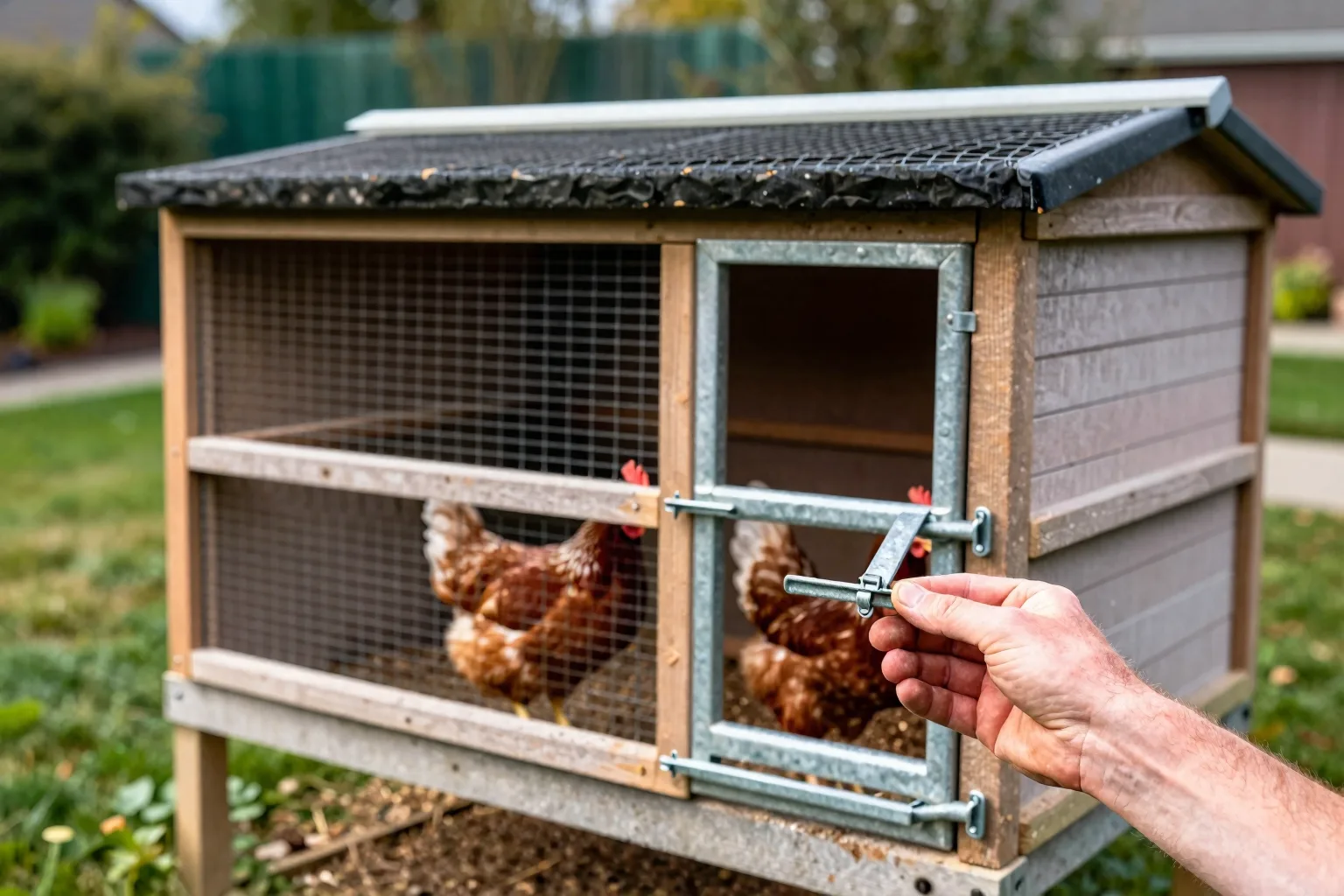
Score every coop against these five weak points before you buy
Marketing language such as secure, fortified, or predator resistant tells you less than five minutes with a tape measure and both hands. Score the complete setup before you put down a deposit.
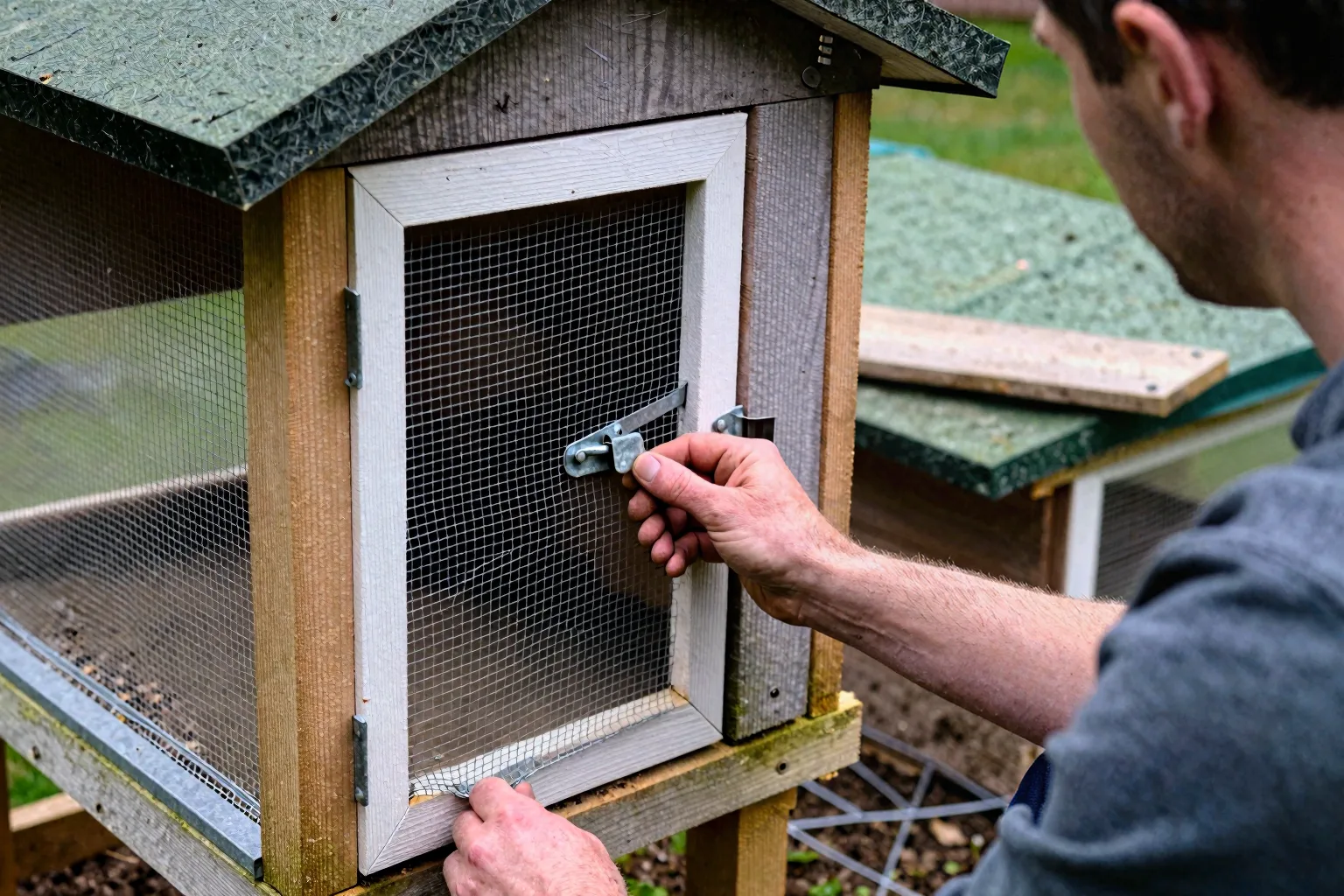
- Mesh: Use 1/2-inch hardware cloth as a sensible backyard baseline on run walls, the run roof, doors, vents, and any opening a predator could reach through. A 19-gauge mesh or heavier gives you a sturdier starting point than light screen. The exact product still matters, so look at the wire itself rather than relying on a photograph.
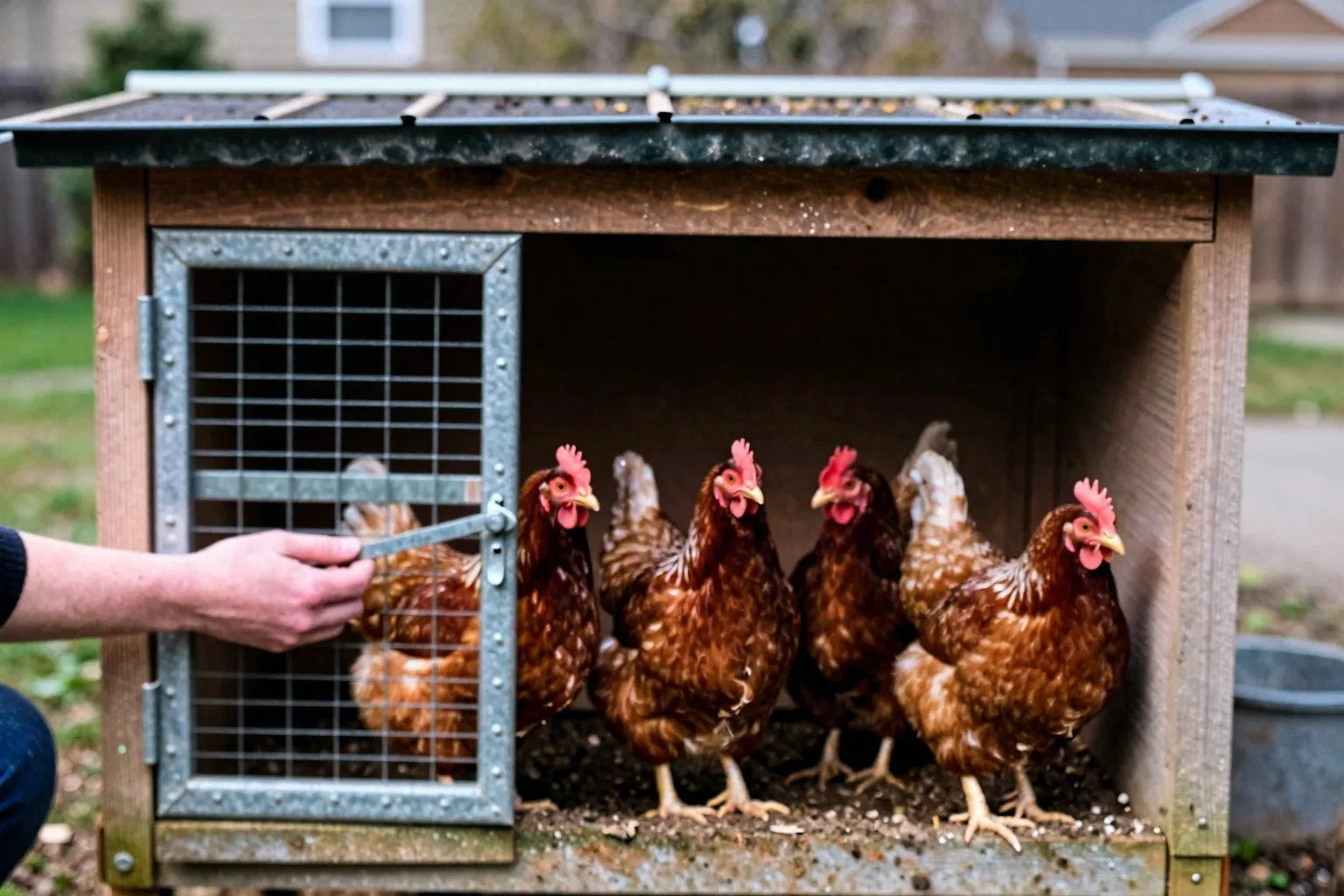
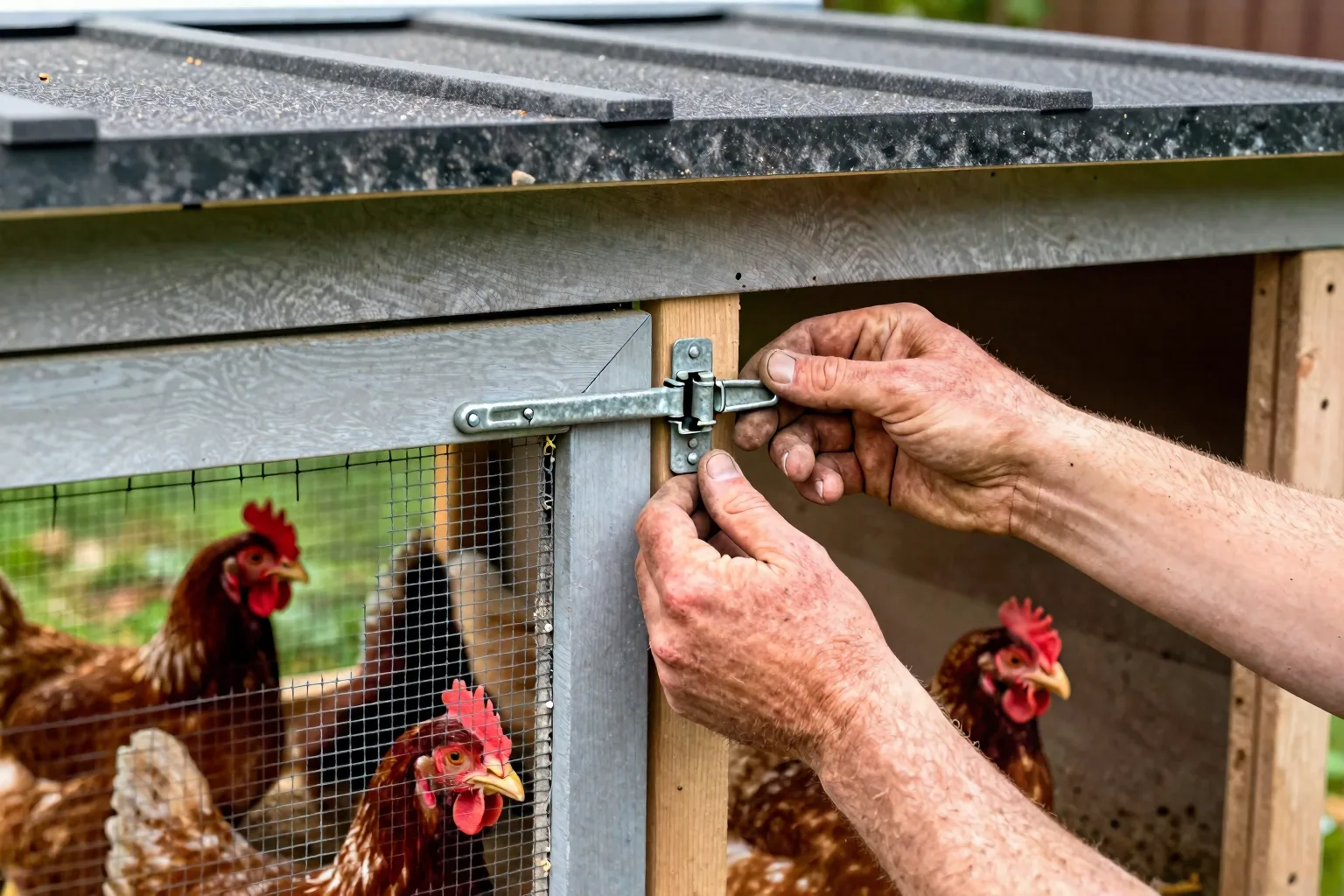
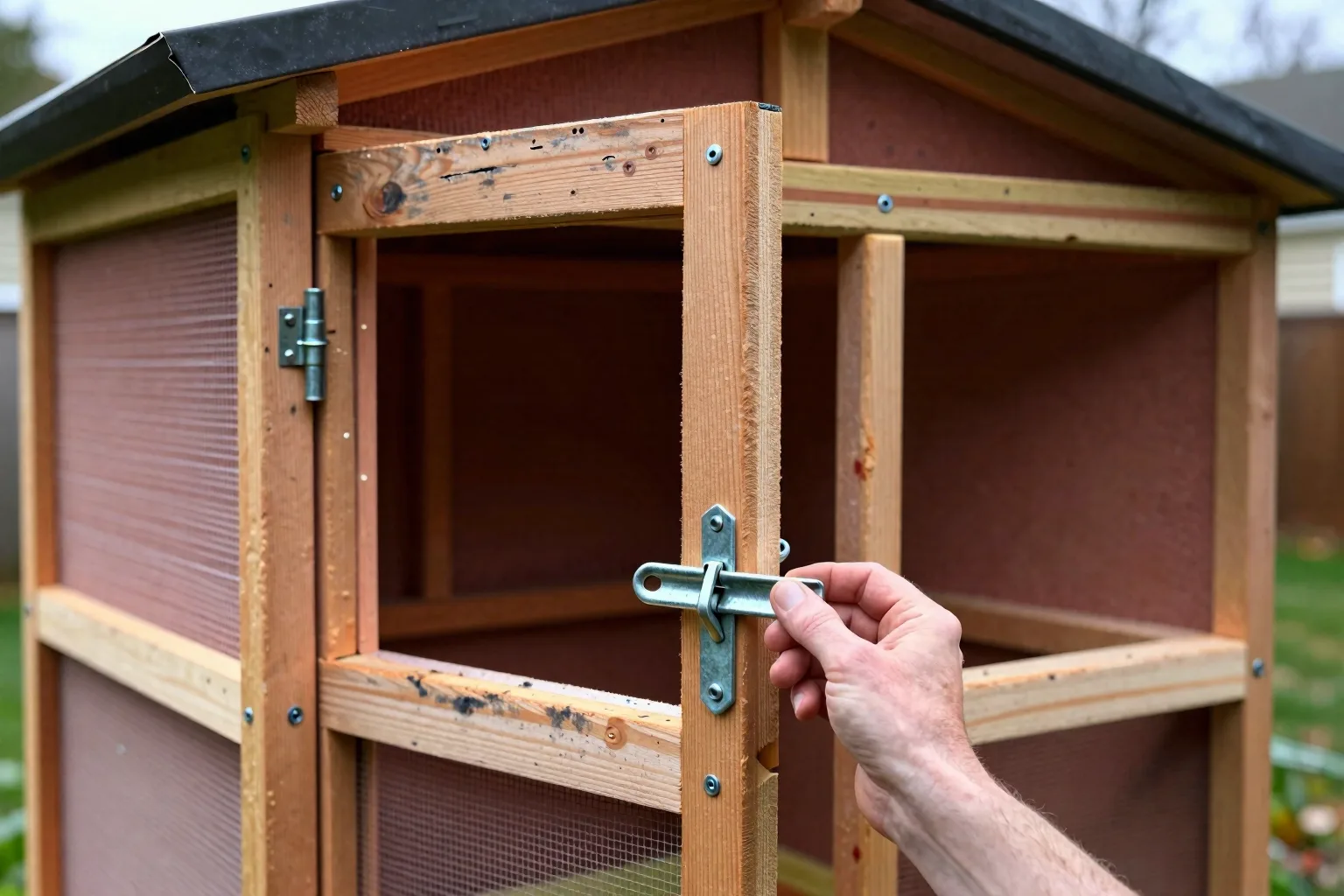
- Latches: A latch that opens with one lift, slide, or twist is a weak design for an exposed door. A two-step latch makes a single movement insufficient. Put the second action out of easy reach where the door design allows it.
- Ground protection: Plan a 12–18-inch outward apron of hardware cloth around the run. Lay it flat and pin it firmly, or bury it where the site and soil make that practical. The point is to move the digging attempt away from the wall instead of asking the wall edge to resist it.
- Anchoring: Lightweight plastic frames, portable runs, and tall panels need a way to resist lifting, shifting, and racking. Anchor posts and corners to the ground. A run that rocks when you push it is not finished.
- Inspection access: Check seams, roof edges, vents, hinges, the coop-to-run joint, and the lower corners. A secure panel that you cannot inspect or repair easily becomes a maintenance problem.
Chicken wire is useful for keeping chickens in a garden bed, but its larger openings and lighter construction don’t make it a reliable primary barrier for determined climbing, reaching, or digging predators. With large dogs, check corner posts, hinge sides, and the latch before assuming the mesh itself is the weak point. Loads travel through those joints first.
Before ordering a named model, compare the current manufacturer specification sheets and installation manuals for the exact configuration you plan to buy. An attached run, roof kit, extension, and door package can change the security details substantially.
Pick 1 for 3–4 hens: Omlet Eglu Go or an equivalent compact plastic system
This is the best fit when you want a small flock, a tidy footprint, and cleaning that doesn’t involve repainting a wooden shell. Look at a compact molded-plastic system such as an Omlet Eglu Go configuration, or a comparable product with a matching enclosed run. Check the current maker’s dimensions and nominal capacity before purchase. Then ignore the maximum number long enough to measure the clear floor and run.
For three or four hens, I’d want roughly 12–16 square feet of usable indoor floor and 24–40 square feet of secure run. A concrete three-hen plan would be 12 square feet inside and 30 square feet outside, with the run fully roofed and protected at ground level. If the offered run is much narrower, treat it as a sleeping coop with an add-on project, not as the finished flock system.
Plastic has a practical advantage here. Smooth surfaces are easier to scrape and wash, and there are fewer exposed joints for damp bedding to sit against. The trade-off is that a compact frame can be light, the attached run may be narrow, and extensions or mesh upgrades can change the total bill quickly. Price the shell, run, roof, apron, anchors, and shipping as one package. Don’t compare a bare coop price with a finished DIY run.
Verdict: Choose this category for 3–4 hens when your site is tight and you can inspect every corner without kneeling in a maze of panels. It’s a good small-system choice. It isn’t a shortcut around a weak run.
Pick 2 for 4–6 hens: a mid-size molded-plastic coop with a properly enclosed run
For four to six hens, step up to a mid-size plastic system such as a current Eglu Cube Mk2 configuration or an equivalent product. The model name is not the security decision. The exact run package is. Check the present product page for clear indoor dimensions, ventilation openings, door hardware, mesh type, and roof coverage before you order.
Plan around 16–24 square feet indoors and 32–60 square feet in the run. For five hens, a simple target is 20 square feet inside and 50 square feet outside. That extra run space gives you somewhere to place the feeder and drinker without turning the pop-door area into a crowded traffic point.
The appeal is low cleaning effort without building an entire shell from scratch. The catch is easy to miss: a larger coop isn’t automatically safer. If the attached run has ordinary chicken wire, an open roof, loose corners, or a door that meets the frame with a finger-width gap, the larger shell has not solved the access problem.
Pros: less exposed wood, straightforward cleaning, and a modular path to more run space. Cons: the integrated run may still need a roof, apron, stronger seams, or better latches. This is the pick for a keeper who wants to avoid full construction but is willing to retrofit the perimeter.
Pick 3 for 6–8 hens: SnapLock Formex Large plus a walk-in hardware-cloth run
Six to eight hens are where a separate coop and run usually become the more sensible security purchase. Use a durable plastic coop such as the SnapLock Formex Large as the shelter, then build or buy a full-height run around it. Verify the current Formex dimensions, ventilation, door hardware, and stated capacity before publication or checkout. Your fit decision should come from clear floor area, not the product name.
Plan on about 24–32 square feet of indoor floor and 48–80 square feet of enclosed run. For six hens, 24 square feet inside and 60 outside is a workable planning example. For eight, move toward 32 and 80. A walk-in run gives you room to inspect roof panels, reach the far corners, and repair the apron without dismantling the whole setup.
Separating the coop from the run is the real advantage. You can give the run a proper roof, a human-sized door, rigid corners, and a continuous hardware-cloth skirt. You can also place the plastic shelter on a drained base while keeping the enclosure broad enough for daily activity.
The weak point is the connection. A neat-looking tunnel or short bridge can have a loose top edge, an oversized opening, or a latch that doesn’t line up after the ground settles. Build the coop-to-run joint as though it were an exterior door. Fasten both sides. Cover the roof. Test it from the outside.
Verdict: This is my middle-ground pick for 6–8 hens. You take on more installation work, but you gain access, repairability, and a run that can be secured properly rather than accepted as an afterthought.
Pick 4 for 8–10 hens: OverEZ Large inside a custom-secured run
A large molded-plastic coop such as the OverEZ Large can save you from building the shelter shell, but it doesn’t remove the need to build a serious run. Check the current model’s clear floor area, ventilation openings, access doors, cleaning access, and stated capacity. Product dimensions can include exterior ledges or attached features that your birds cannot use as floor.
For eight to ten hens, plan roughly 32–40 square feet indoors and 64–100 square feet in the run. A ten-hen example would aim near 40 square feet inside and 100 outside. That is a substantial enclosure. If you can’t roof, inspect, and anchor it properly, reduce the flock plan or choose a smaller layout that you can maintain.
The run is the deciding security purchase. Budget space for a roof, 1/2-inch hardware cloth, a ground apron, anchored posts, a lockable human door, and stronger hardware at the corners. The plastic shell may arrive clean and ready to use, but every extra seam between shell, run, roof, and gate is another place to inspect.
A large flock magnifies every weak detail because there are more birds, more bedding, and more daily access points to maintain. That’s not a reason to cram ten hens into a tiny box. It’s a reason to make the run layout simple enough that you’ll actually check it.
Verdict: Pick the large plastic shell when you value quick cleaning and don’t want to frame the coop itself. Don’t choose it because the shell looks substantial. At this flock size, the custom run determines whether the whole setup is a good buy.
Pick 5 for 10–12 hens: a DIY shed coop plus a welded-wire enclosure
For ten to twelve hens, a DIY shed coop is the recommendation when your birds may spend long stretches inside the enclosure. It also makes sense where snow, rain, local rules, or a growing flock will make a small attached run frustrating. You get room, repairable parts, and the ability to place doors and vents where the site needs them.
Plan on about 40–48 square feet of usable indoor floor and 80–120 square feet of covered run. A six-by-seven-foot interior gives you 42 square feet for ten hens. For twelve, plan closer to 48. An 8-by-10-foot run gives 80 square feet; a 10-by-12-foot run gives 120. Those examples show why footprint matters before materials arrive.
The minimum build is a lockable human door, a predator-resistant pop door, protected vents, a roofed run, anchored posts, and 1/2-inch 19-gauge-or-heavier hardware cloth on vulnerable openings. If the welded-wire enclosure has openings larger than that, add hardware cloth where a predator can reach through, especially along the lower walls, doors, and corners. Add a 12–18-inch apron around the perimeter.
Price the materials from current local lumberyards and farm-supply shops rather than trusting an old online estimate. Record separate lines for framing, mesh, roofing, fasteners, hinges, latches, anchors, apron material, delivery, and site preparation. Keep labor, tools, permits, and concrete work in separate columns. That gives you a materials-only total without pretending that one dollar range fits every region.
The trade-off is plain. A custom build gives you more room and easier repairs, but it gives you more chances to create a bad seam, an unprotected vent, or a door that doesn’t close squarely. DIY saves little if you leave the last six inches at the roof edge unfinished.
Compare the five setups by usable space, security, and current cost
Use this as a buying worksheet. The indoor and run figures are planning targets, not claims about any manufacturer’s current rating. For the cost column, fill in today’s local price for the complete secured system. Shipping, tax, mesh changes, roof panels, anchors, and site work are what make a shell-only comparison misleading.
| Setup | Comfortable flock | Usable indoor floor | Secure run target | Price worksheet | Main upgrade | Likely failure point |
|---|---|---|---|---|---|---|
| Compact plastic system | 3–4 hens | 12–16 sq ft | 24–40 sq ft | Shell + attached run + roof + apron + anchors | Mesh and latch check | Light frame or narrow run |
| Mid-size plastic system | 4–6 hens | 16–24 sq ft | 32–60 sq ft | Coop + run package + extensions + security work | Roof and lower perimeter | Weak attached-run corners |
| Separate plastic coop and walk-in run | 6–8 hens | 24–32 sq ft | 48–80 sq ft | Coop + framed run + roof + hardware cloth + door | Coop-to-run connection | Loose tunnel or joint |
| Large plastic coop in custom run | 8–10 hens | 32–40 sq ft | 64–100 sq ft | Shell + full custom perimeter + site work | Walk-in gate and anchoring | Too many seams to inspect |
| DIY shed and welded-wire enclosure | 10–12 hens | 40–48 sq ft | 80–120 sq ft | Lumber + mesh + roof + hardware + apron + site work | Build-quality inspection | Construction error at vents or edges |
Calculate cost per comfortable hen as the complete secured setup divided by the number of hens you genuinely plan to keep. Don’t divide by the maker’s maximum capacity. A low shell price can look attractive until the run needs a roof, new mesh, a larger door, ground protection, and anchors.
The most useful formula is simple: full setup cost = coop shell + run frame + predator-resistant mesh + roof + doors and latches + anchors + ground apron + delivery and site work. If you want a local comparison, use How much does it cost to build a backyard chicken coop? as the companion worksheet, then replace every sample price with a current quote from your area.
Install the missing defenses: mesh, latches, anchoring, and the ground apron
Security work is easiest before your birds arrive. Give yourself an empty run, daylight, and enough time to make a second pass.
- Level the footprint. Mark the coop and run with stakes. Remove sharp debris. A level base helps doors meet their frames evenly and makes gaps easier to spot.
- Anchor the structure. Fix lightweight coop corners and run posts to stable ground. Use hardware that matches the frame. Push each corner from several directions. If the structure rocks, add support before adding birds.
- Fit the apron. Extend hardware cloth outward 12–18 inches around the run. Keep the outer edge flat and pin it closely to the soil or bury it where appropriate. Close the corners so the apron doesn’t end in a fold that can be pulled aside.
- Close the reach points. Inspect under doors, around hinges, beside vents, at roof edges, and where the run meets the coop. Cover every opening that lets a paw, snout, or head reach the birds or the latch.
- Upgrade the access hardware. Use a two-step latch where a simple hook or slide can be moved in one action. Make sure the latch still works after rain, frost, and a little frame movement.
- Test from outside. Close the human door and pop door. Push each panel, lift the lower edge, and pull at the mesh near every corner. Then inspect the setup at dusk, when you’ll normally close your birds in.
A hands-on push test finds problems that a product photograph cannot. Listen for a click, watch for a panel moving away from its frame, and look for daylight under the door. For extra raccoon-specific checks, keep How to keep raccoons out of a chicken coop nearby. It belongs beside the build, not in a drawer after the first repair.
Know when a smaller coop beats a bigger one—and when it doesn’t
A smaller coop can be the safer choice if it has fewer joints, a short run you can inspect completely, and doors that close tightly. Security is partly a maintenance problem. A structure you can check in five minutes has an advantage over a larger prefab whose roof edge and rear corners disappear from view.
A larger walk-in run wins when your hens will be confined for long periods, when the ground stays muddy, or when rain and snow make free access unreliable. More roofed space also gives you room to separate wet bedding from feeding areas and to work without chasing birds through a low tunnel.
Climate changes the details. Hot weather calls for shade and cross-flow without leaving a reach-through opening. Wet climates need drainage and a roof that keeps bedding dry. Snowy areas need a roof and frame that can carry the local load, plus ventilation that removes moisture without creating a direct cold draft at roost level. Read Chicken coop ventilation in winter before closing up a shed coop.
My judgment is simple: buy the smallest system that gives your actual flock enough usable room and lets you inspect every defense. If that system needs several add-on tunnels to reach the target, start with the larger run instead.
Three setup questions buyers still ask
Is a chicken tractor predator-proof?
No. A chicken tractor can be a useful way to move birds across grass, but movement makes a continuous ground apron harder to maintain and wheels or handles can create lift points. Treat it as secure only when the roof, ends, lower edges, doors, and overnight parking spot are all protected. Park it on a firm, checked surface after dark, or place a separate fixed enclosure around it.
Does uneven ground make a coop insecure?
It can. Uneven soil can leave a triangular gap under a door or along the bottom of a run, and it can twist a frame so the latch no longer lines up. Level the main footprint, step the apron with the ground, and close remaining gaps with firmly attached mesh rather than stuffing loose material beneath the wall. Recheck after heavy rain or frost moves the soil.
Is an automatic chicken door enough to protect hens at night?
No. An automatic door protects one opening only. It still needs a correctly set closing time or light response, dependable battery or power, a clear track, and a frame that stays square. Test it repeatedly with the run empty. Watch the door close fully, then try the lower edge from outside. Keep checking that it actually closes instead of assuming the motor makes the coop secure.
Make the buying call with this flock-size checklist
Choose the compact plastic system for 3–4 hens. Choose the mid-size plastic system for 4–6. Choose a separate coop and walk-in run for 6–8. Put a large plastic coop inside a custom-secured run for 8–10. For 10–12, build the shed coop and the roofed enclosure together.
Before you order, check six things:
- usable indoor floor area, excluding boxes and fittings;
- 1/2-inch hardware cloth on vulnerable openings;
- a covered run roof and protected vents;
- a 12–18-inch ground apron or an equally considered digging barrier;
- two-step latches on every human and bird access door; and
- anchors that stop corners and panels from lifting or rocking.
Your next action this week is concrete: measure the available site with a tape, mark the coop and run footprint on the ground, and price the complete secured setup rather than the coop shell. If the footprint cannot hold the target run, reduce the flock plan before you buy. Save the six-point list, then use the current manufacturer specification sheets and installation manuals to check the exact model package.
Buy the system, not the box. That one decision will keep your comparison honest.
Frequently Asked Questions
Does raising a chicken coop off the ground make it predator-proof?
No. Elevation can improve drainage and make some digging harder, but rats, snakes, raccoons, and climbing predators can still reach birds unless the underside, access points, and run are protected.
Can an electric fence replace hardware cloth around a chicken run?
No. An electric fence can add an outer deterrent, but vegetation, poor grounding, snow, and power failures reduce reliability; keep a physical mesh barrier as the primary defense.
Is an automatic chicken door enough to protect hens at night?
No. It secures one opening only. Test the closing time, battery or power supply, obstruction sensor, and connection to the run, and continue checking that the door actually closes.